
 admin@bonzermarketeers.com
 +918799573034
A plant engineer picked a pump based on flow rate. It got installed, ran for three months, and broke down. No one had checked the fluid viscosity. The result? Two days of unexpected downtime, a rush order for spare parts, and a very tough conversation with the operations manager.
This kind of story is not unusual. The pump selection concept seems simple on paper until you are the one explaining why a brand-new pump is already sitting idle. There are tricky decision points in every selection, and experienced engineers run into them just like the newcomers.
This pump selection guide walks through seven of those mistakes in AODD and industrial pump applications, along with clear fixes to avoid each one. Bonzer put this together based on real conversations with maintenance and plant teams across chemical, pharma, and manufacturing sites.
Why Pump Selection Errors Are More Common Than You Think
Before considering the industrial pump selection criteria, it is necessary to avoid pump selection errors. Some common mistakes do not start with the catalogue selection; they start upstream.
● Fluid data sheets arrive incomplete. Viscosity, temperature, and also solid content are missing or assumed.
● Procurement timelines are tight. Hence, this often leads the team or manufacturing engineers to the cheapest units.
● One person makes the call without cross-checking with the overall process, maintenance, or procurement.
● A previous installation is copied without anyone checking whether certain operating conditions remain the same.
Before making any final choice, it is necessary to fix the data before you actually touch the catalogue. That single habit eliminates most of what follows.
7 Pump Selection Mistakes Engineers Should Avoid
While selecting a new pump, engineers often make some common mistakes. But, considering the right facts in mind allows you to avoid the chances.
1: Selecting on Flow Rate Alone, Ignoring Head Pressure
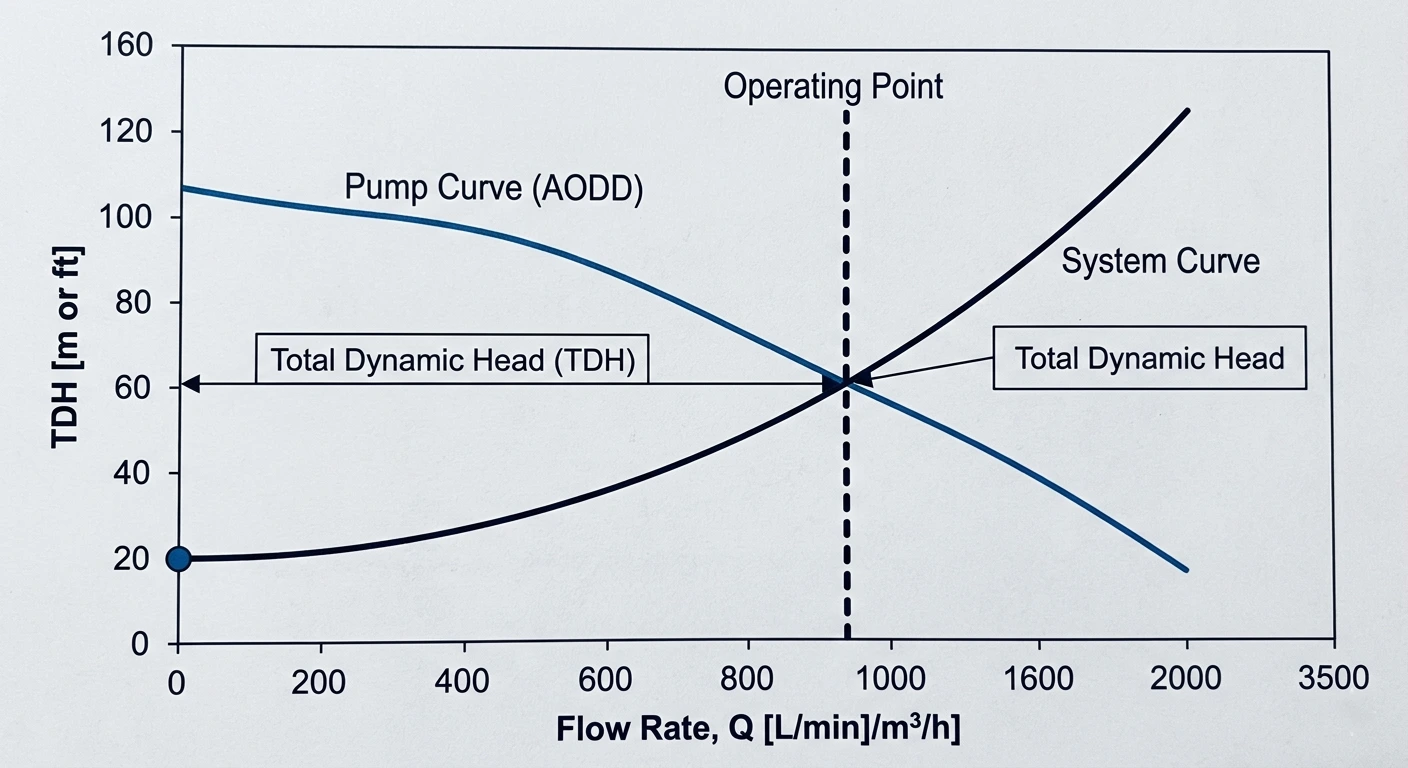
Why it happens: Flow rate is the first number on every spec sheet, so it becomes the default selection filter.
Consequences: The pump looks fine on paper. Then it goes in, and it cannot push the fluid against the real back-pressure in the system. Output falls short. The motor or air supply pushes harder to keep up. Wear builds faster than anyone planned for.
What to Do Instead: Before you shortlist any pump, calculate total dynamic head (TDH). That means static head plus friction losses in the pipework plus discharge pressure. Once you have TDH, match the pump curve to the full system curve. For a detailed breakdown of each specification parameter, see 10 Key Pump Specification Parameters. Flow rate on its own is not a pump selection.
2: Not Accounting for Fluid Viscosity
Why it happens: Engineers assume water-like viscosity by default unless the fluid is clearly thick.
Consequences: This is one of the most common diaphragm pump sizing mistakes we see in food and chemical plants. A pump rated at 50 LPM on water may only manage 25 LPM or less on a 500 cP product. That gap does not show up when you are comparing spec sheets. It shows up on the production line.
What to Do Instead: Get the viscosity at the actual operating temperature, not room temperature. Those two numbers can be very different. Then apply the manufacturer's viscosity correction curves to the rated performance before you decide on a model. For AODD pump for chemical transfer, this step is not optional.
3: Ignoring Fluid Compatibility with Wetted Parts
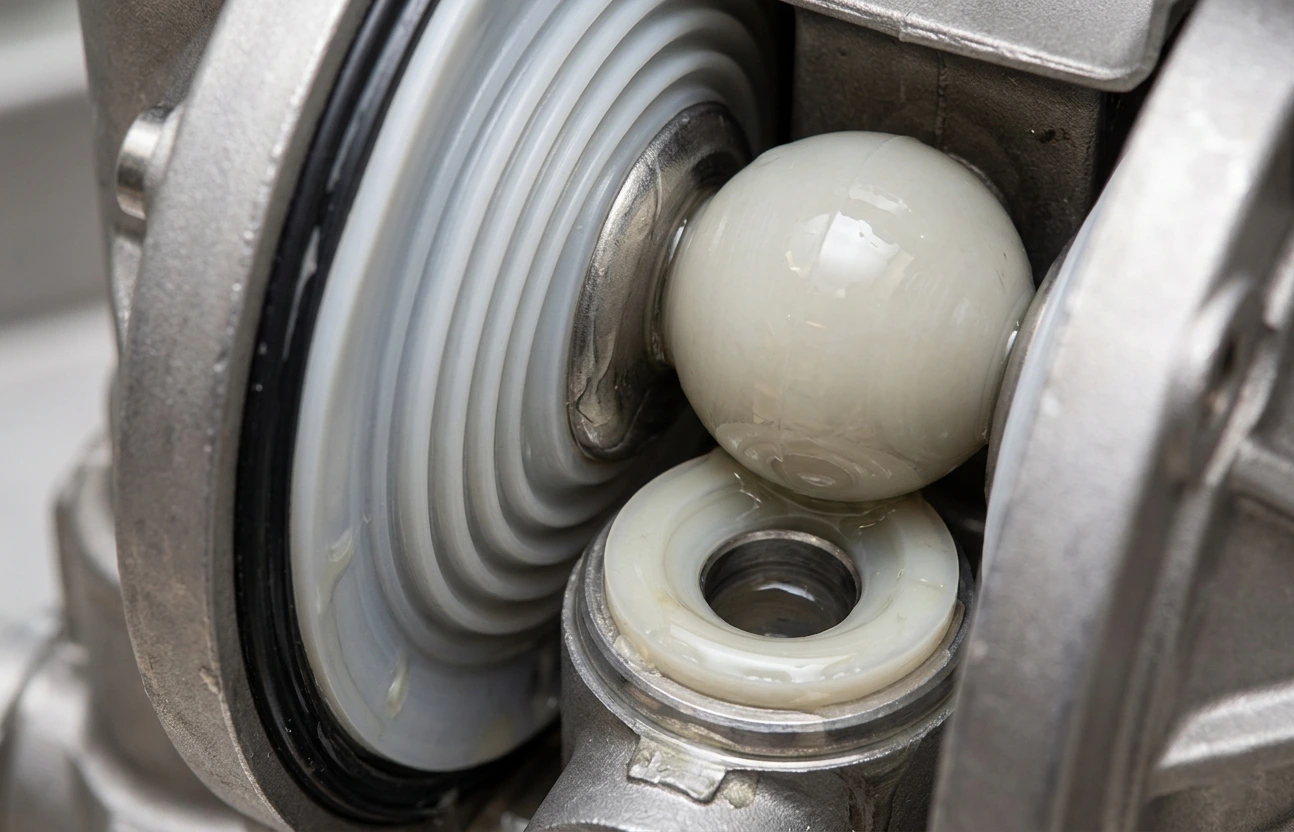
Why it happens: The pump model gets chosen first. Materials get figured out later and rarely get the attention they deserve.
Consequences: An incompatible elastomer swells, breaks down, or leaches into the fluid. In the case of food or pharma production, that is actually an act that may cause contamination. In a chemical plant, it is a safety issue. Both are completely avoidable with a thirty-minute compatibility check before the order goes in.
What to Do Instead: Every single wetted part needs to be checked against the fluid: body, diaphragm, ball, seat, gasket, and O-ring. For AODD pumps used in chemical transfer, your material options are PTFE, EPDM, FKM, Santoprene, and Buna-N.
Each one behaves differently with different chemicals and temperatures. Use the manufacturer's own compatibility chart for your specific fluid and operating temperature, not a general industry reference.
4: Over-Sizing the Pump
Why it happens: Engineers pile safety margin on top of safety margin until the selected pump ends up a full size bigger than the job needs.
Consequences: What actually happens is that a pump that runs throttled most of the time may not work properly. Running a throttle creates more turbulence, wears out internal parts faster, and wastes more energy. On AODD pumps, running at reduced air pressure to manage an oversized unit causes stalling and uneven output.
What to Do Instead: Pump specification errors guideline mentions that a properly sized pump should typically operate around 80% of its maximum rated capacity. If you need room for future demand growth, handle that through the air pressure adjustment range, not by jumping to the next model up.
5: Underestimating the Solids Content of the Fluid
Why it happens: The fluid is called "clean" because you cannot see any particles in a sample.
Consequences: Fine abrasive content does not look visibly clear. Even fine abrasive particles can accelerate wear significantly compared to clean-fluid service. However, the pump runs fine for the first few months. Then performance drops off sharply. By the time you notice, serious wear has already happened.
What to Do Instead: Measure particle size, hardness, and concentration before you choose contact materials. For abrasive service, ceramic seats and stainless balls, you need to count on an extra cost. Set proper maintenance intervals shorter than standard. For AODD pumps on paint, coating, or mineral slurry, ball and seat material selection matters just as much as diaphragm material.
6: Selecting the Wrong Pump Type for the Application
Why it happens: Engineers go with what they already know or what is already running in the plant.
Consequences: A centrifugal pump on a shear-sensitive fluid will damage the product. A gear pump on a fluid with solids will seize. Using an AODD pump for simple low-viscosity water transfer may add unnecessary operating cost where simpler pump technologies would perform adequately. Getting the pump type right is where any solid industrial pump selection process should start.
What to Do Instead: AODD pumps are the right fit when the application involves:
● Abrasive slurries or particle-heavy fluids
● Shear-sensitive products like emulsions or polymers
● Self-priming from a low or dry inlet
● Dry-run operation without risk of seal damage
● Hazardous, flammable, or aggressive chemical transfer
If the duty does not fit any of these, do an honest comparison before committing to AODD.
7: Not Factoring in Maintenance Accessibility and Spare Parts Availability
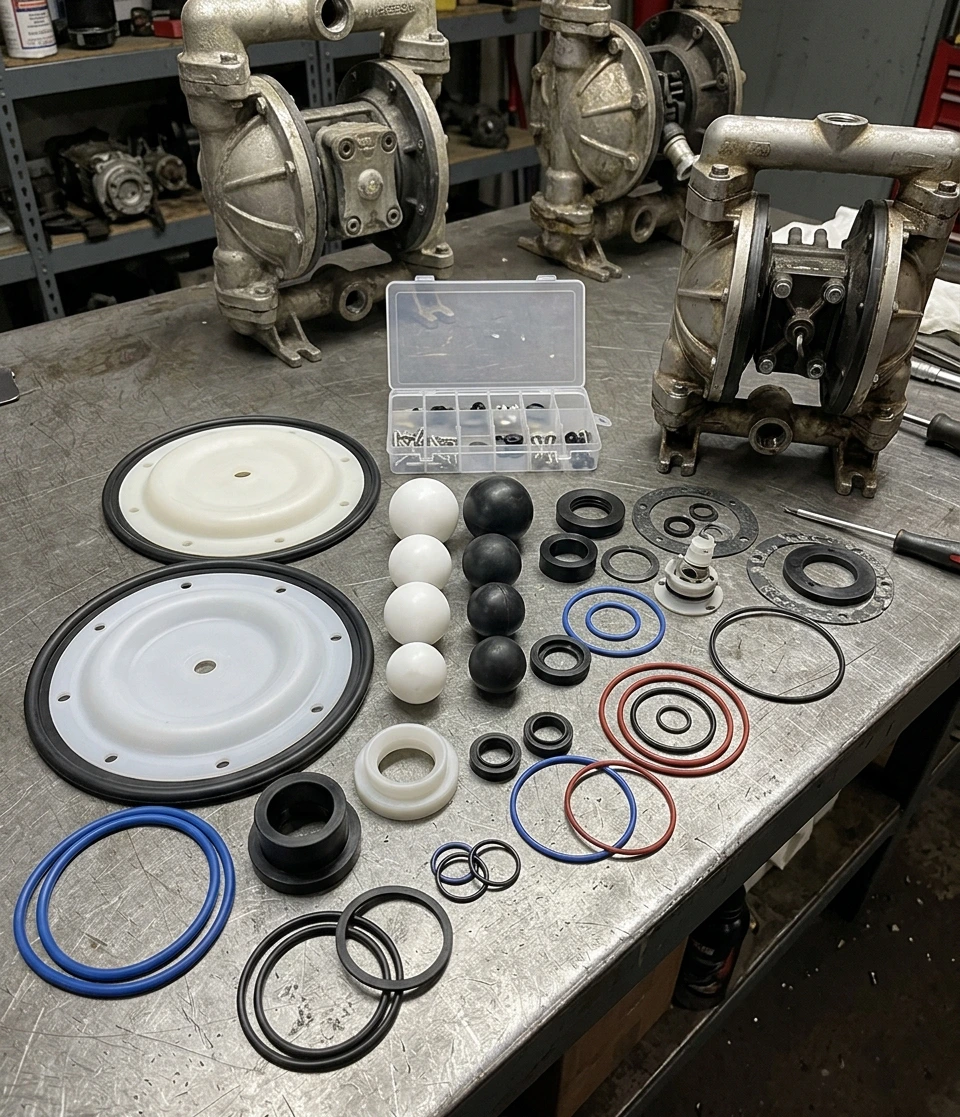
Why it happens: The focus stays on pump performance. Maintainability gets assumed.
Consequences: The pump gets installed in whatever position the pipework allows. The first time the diaphragms need changing, it takes two people, an extension bar, and half a shift to get there. Second time, the wear part shows a break with a six-week lead time with no local stock hand. This is how a routine maintenance job turns into a production stop.
What to Do Instead: Before you finalise any model, confirm:
● Physical access to wear components in the installed position
● Local availability of spares for that specific model and size
● Standard lead time for diaphragms, balls, seats, and seals
● Whether a complete repair kit is available off the shelf
Bonzer stocks pump-specific AODD pump spare parts and repair kits for immediate dispatch. When a diaphragm fails mid-run, lead time suddenly matters far more than it did at the selection stage. You can also explore how to decide between Full Repair Kits vs Individual Spares and which parts to prioritise in Which AODD Pump Spare Parts to Stock.
A Pre-Selection Checklist for Engineers
If you want to learn how to select an AODD pump, a thorough pre-selection checklist for engineers plays a vital role. This works before a specification is submitted:
● Flow rate calculated and TDH confirmed for the complete system curve
● Fluid viscosity confirmed at actual operating temperature
● Temperature range documented: minimum, operating, and maximum
● Chemical compatibility checked for every wetted component
● Solids content assessed: particle size, hardness, and concentration
● Inlet conditions confirmed: suction lift, NPSH available, suction line diameter
● Required certifications identified: ATEX, FDA, 3-A, or site-specific standards
● Pump type selected based on application criteria, not familiarity
● Installation space and maintenance access were physically checked
● Spare parts and repair kit availability confirmed for the selected model
Frequently Asked Questions
Q1. What is the most common mistake engineers make when selecting an AODD pump?
The most common mistakes engineers make is selecting a pump based on flow rate without evaluating TDH, viscosity, and material compatibility together. These may affect pump reliability and service life.
Q2. How do I check material compatibility for an AODD pump?
Work through the manufacturer's chemical compatibility chart. This helps to get a clear idea of each wetted component individually: diaphragm, body, ball, seat, gasket, and O-ring. Do not use a generic elastomer reference table because compatibility ratings shift with temperature. So it is necessary to consider the actual process temperature, not the ambient.
Q3. Is it better to over-size or under-size a pump?
Neither works. An oversized pump runs throttled, wears faster, and uses more energy. On the other hand, an undersized pump falls short on process demand. Hence, it is necessary to consider the right sizing always.
Q4. When should I specify an AODD pump over other pump types?
AODD pumps are well suited for applications involving abrasive slurries, shear sensitive fluids, viscous materials and chemical transfer where material compatibility and safe containment are crucial. Hazardous or explosive environments often favour air-driven pumps as they do not need electric motors and are less likely to cause ignition.
Q5. How does Bonzer help engineers with pump selection?
Bonzer supports engineers throughout the pump selection process. This includes evaluating fluid properties, system curves, installation constraints, and spare parts availability. The goal is to ensure the selected pump is technically accurate at the time of ordering while also remaining reliable, serviceable, and easy to maintain throughout its operational life.
Conclusion
Going through the right industrial pump selection criteria as per the guidelines is necessary. First, consider the model, then the fluid properties, material compatibility, pump technology, and proper maintenance. These are the factors that determine whether a pump delivers stable service life or becomes a recurring maintenance issue. Each step depends on the next one. Hence, skipping one is where the problems start.
If you are working through a pump specification and want guidance before you order, or if parts availability is part of the decision, get in touch with Bonzer and make the right choice.
Talk to Our Team: bonzerpumps.com/contact