
 admin@bonzermarketeers.com
 +918799573034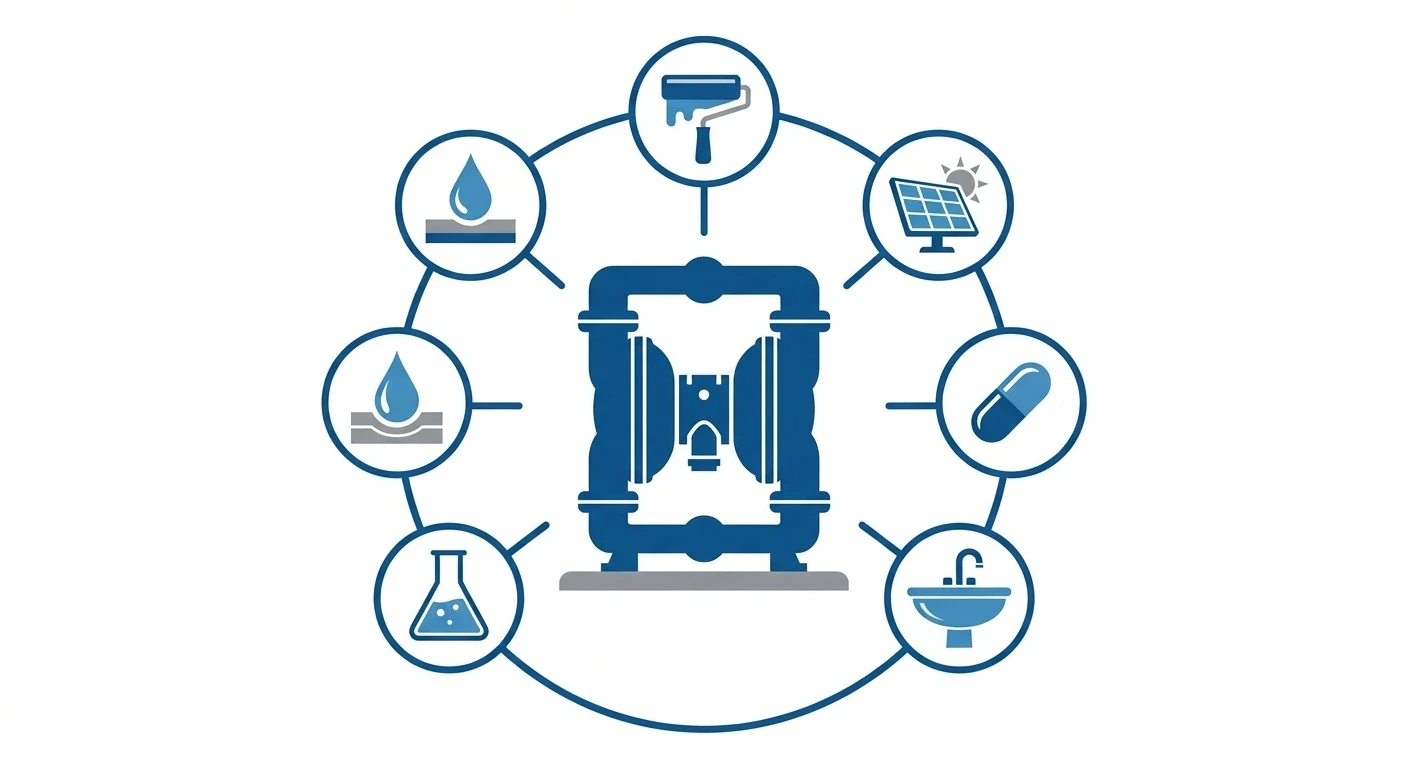
A chemical processor needs to transfer corrosive acids safely. A mining site must move abrasive slurry packed with solids. Meanwhile, a paint manufacturer often needs to handle thick, viscous coatings that can clog conventional pumps. Although the fluid-handling challenges will vary as you jump from one industry to another, the solution they rely on is the same: Air-Operated Double Diaphragm pumps.
Built to handle demanding applications with minimal downtime, these have earned quite a commendable reputation. Their ability to manage aggressive chemicals, abrasive materials, and variable flow conditions is what makes them indispensable across multiple sectors. Having said that, let’s learn the top industries that use AODD pumps and why they continue to depend on this equipment.
Why are AODD pumps used across so many industries?
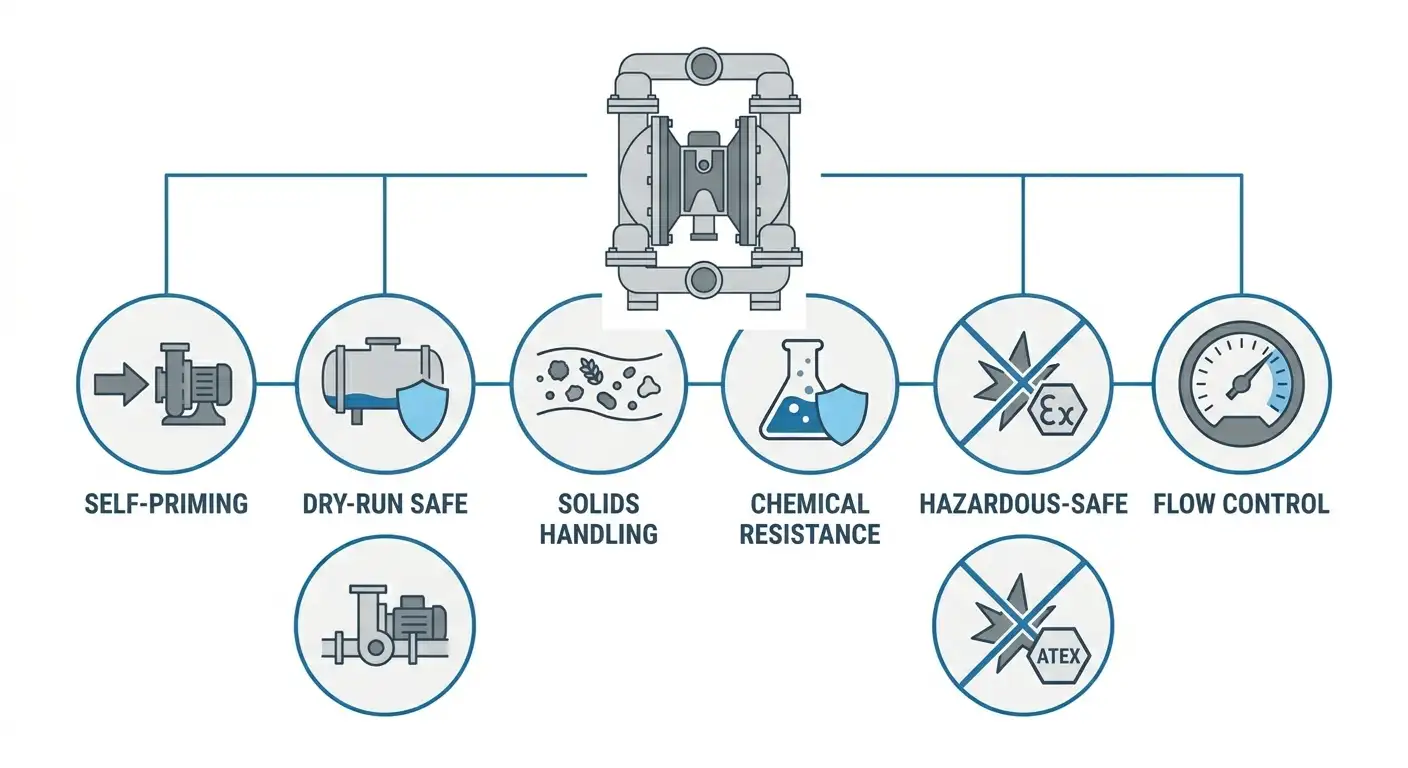
Not every industry-grade pump can handle abrasive slurries one day and corrosive chemicals the other. But when it comes to the AODD pump, the story is completely different. Before understanding its use case industry-wise, let’s learn why it has become such a reliable solution for fluid transfers.
Self-priming performance: These pumps can start without depending on manual priming, which further reduces the setup time and makes them ideal for intermittent-duty applications.
● Ability to run dry: What makes AODD pumps superior to others is their ability to run dry without suffering from internal component damage or wear caused by friction.
● Handles solid with ease: Their design allows the passage of solids, sludges, and abrasive materials that would typically clog or wear out other pumps.
● Resistant to aggressive materials: With the right diaphragm and housing materials, AODD pumps can safely transfer acids, solvents, caustics, and other corrosive fluids.
● Safe in hazardous environments: As they operate using compressed air rather than electricity, they are suitable for areas where sparks could create safety risks.
● Precise and flexible flow control: Flow rate and discharge pressure can be adjusted simply by regulating the air supply, giving you greater process control.
Industry #1: Paint Industries
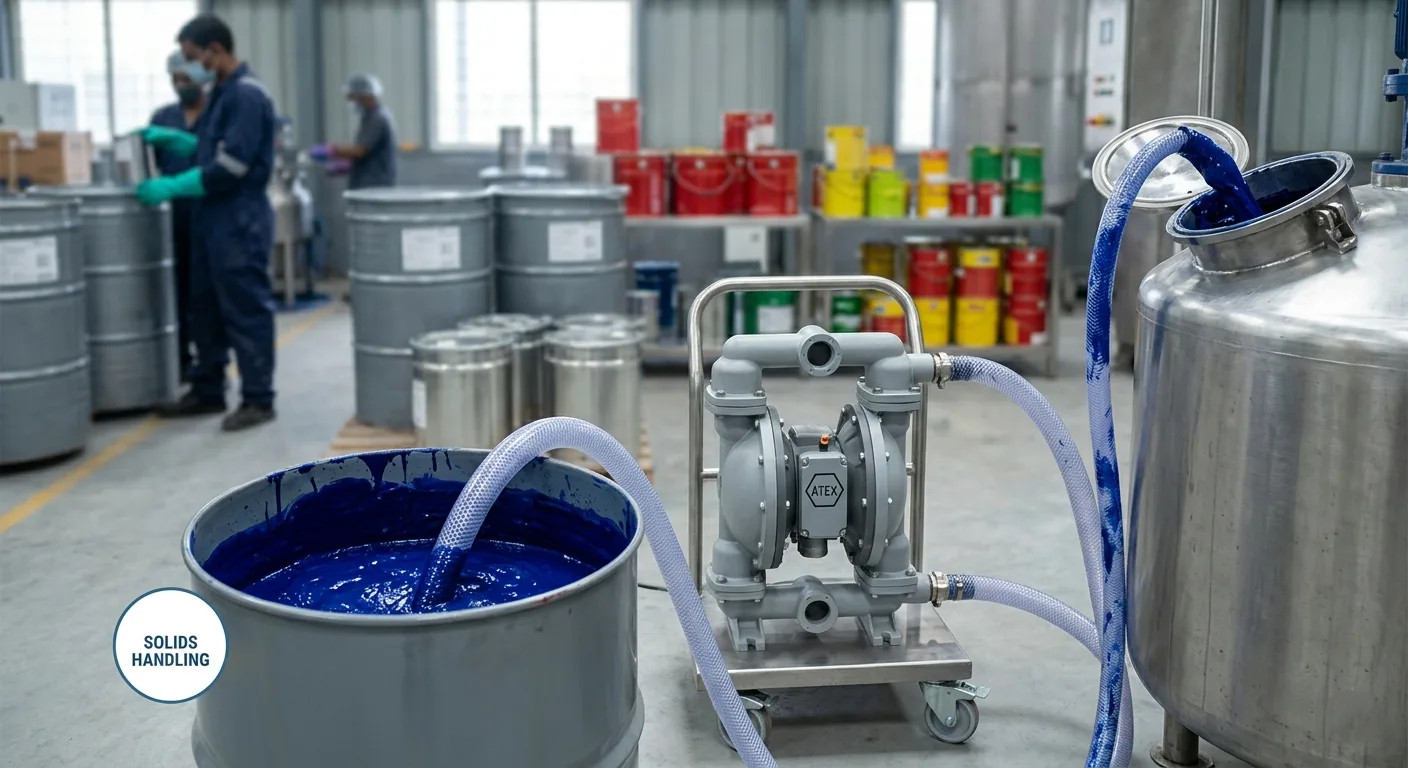
Paint manufacturers and coatings producers routinely work with products that span a wide viscosity range - from thin solvent-based formulations to thick, pigment-heavy coatings loaded with fillers and abrasives. Maintaining product consistency throughout mixing, circulation, and filling is critical, as excessive agitation can destroy pigment dispersion, alter texture, and compromise the final coating's performance.
Common Applications
● Paint transfer between drums and production lines
● Pigment circulation systems
● Resin handling and drum unloading
Why AODD Pumps Work
AODD pumps handle paint and coatings applications with low-shear pumping that protects pigment dispersion, adjustable flow rates for precise control during filling and packaging, and a simple construction that makes batch cleaning fast. They also transfer thick, pigment-heavy coatings efficiently without clogging.
Industry #2: Solar Industries
Solar PV (photovoltaic) Cell manufacturing involves a series of chemical-intensive processes — surface etching, cleaning, coating, and slurry handling — that demand pumps capable of performing reliably in continuous, precision-driven environments. The chemicals used are often highly corrosive, and even minor leaks can contaminate sensitive process stages.
Common Applications
● Chemical transfer during photovoltaic cell manufacturing
● Cleaning chemical circulation
● Slurry handling in cutting and polishing stages
Why AODD Pumps Work
PTFE diaphragms and chemically resistant wetted materials give AODD pumps excellent compatibility with aggressive process chemicals. Their seal-less design minimises contamination risks, while reliable air-powered operation keeps continuous production lines running without unplanned downtime.
Industry #3: Pharma Industries
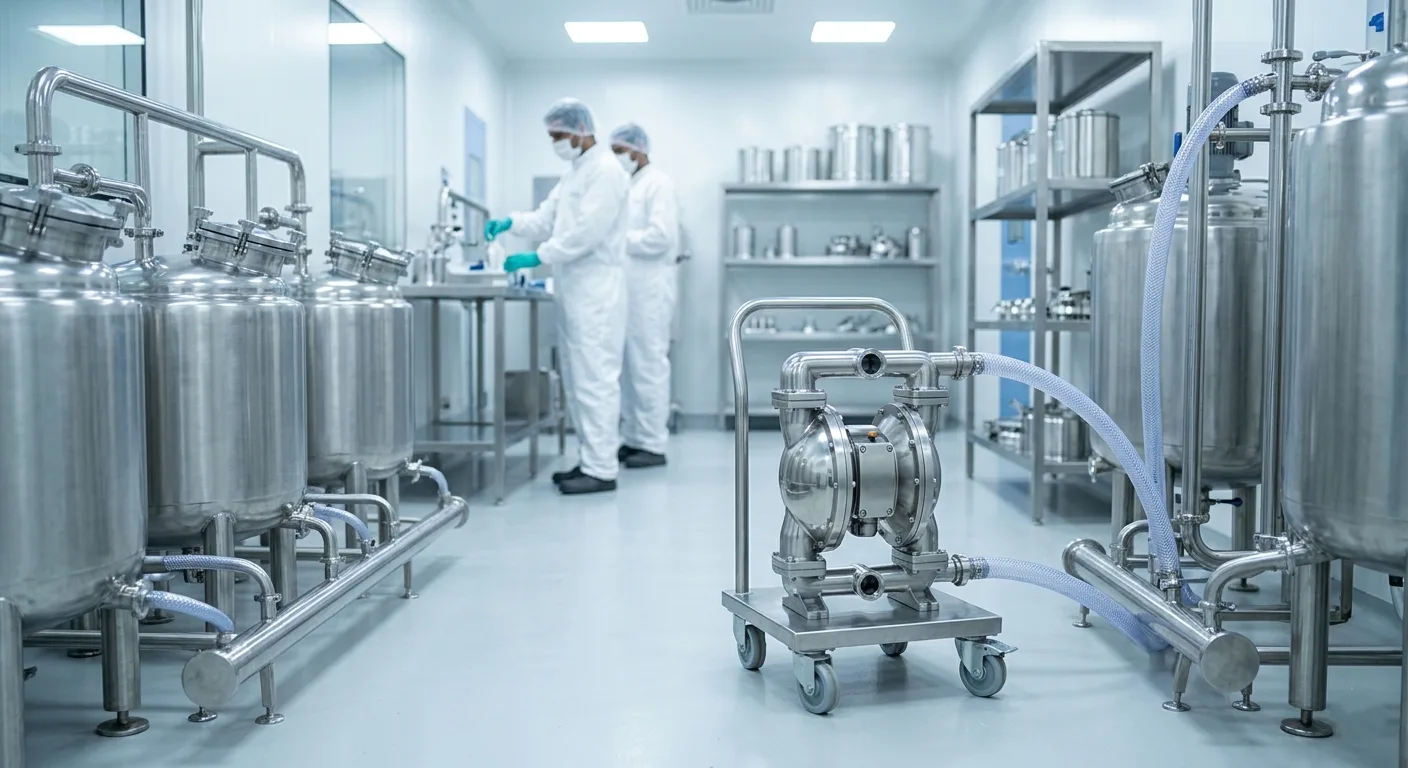
Pharmaceutical manufacturing operates under some of the strictest hygiene and contamination standards of any industry. Ingredient transfers, solvent handling, and chemical dosing all require pumps that protect product purity, support clean-in-place procedures, and handle sensitive formulations without damaging their integrity.
Common Applications
● Active ingredient and excipient transfer
● Chemical dosing and solvent handling
● Process fluid transfer during batch production
Why AODD Pumps Work
Sanitary AODD configurations with stainless steel construction and food-grade elastomers support hygiene compliance, while low-shear transfer preserves sensitive formulations. Easy disassembly speeds up cleaning between batches, and consistent performance across cycles reduces production variance.
Industry #4: Sanitaryware Industries
Ceramic and sanitaryware production relies on the continuous movement of abrasive slurries — clay bodies, glazes, and raw material suspensions — that put intense wear pressure on conventional pumping equipment. High solid content fluids accelerate component degradation, increasing maintenance frequency and replacement costs.
Common Applications
● Ceramic slurry transfer and circulation
● Glaze circulation and raw material pumping
● Waste slurry movement and disposal
Why AODD Pumps Work
AODD pumps pass dense, abrasive ceramic slurries without clogging, and durable diaphragm construction resists particle wear to extend service life. Fewer wear-prone components mean less maintenance downtime, and consistent flow control supports stable production quality.
Industry #5: Chemical Industries
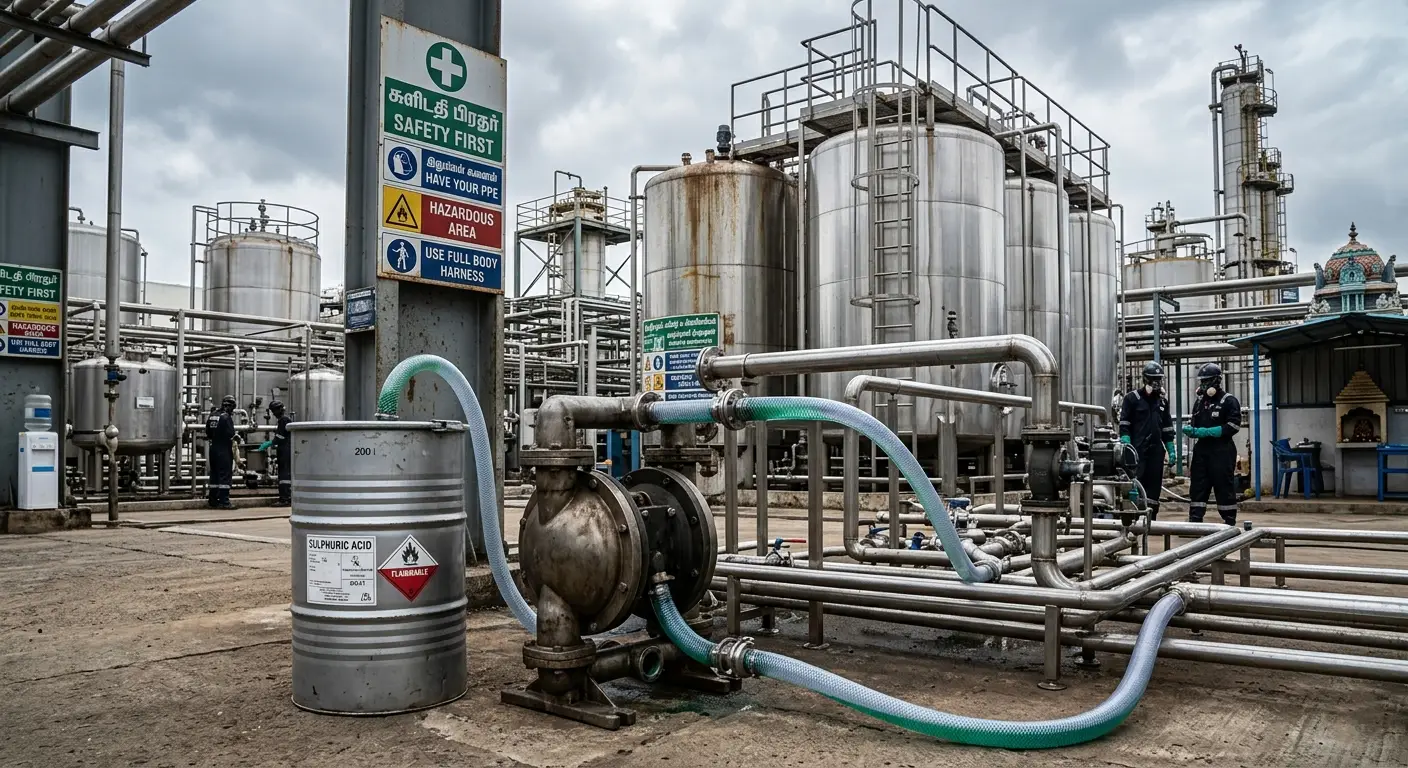
Chemical processing facilities handle some of the most aggressive substances in industrial use — concentrated acids, alkalis, solvents, and reactive compounds that can degrade standard pump components, create leak risks, and generate dangerous exposure hazards. Operating in areas where flammable vapours are present adds another layer of complexity that eliminates electrically powered pumps as an option.
Common Applications
● Acid and solvent transfer between storage and process stages
● Chemical dosing into production lines
● Bulk chemical movement and drum emptying using drum and container pumps
Why AODD Pumps Work
PTFE diaphragms and chemically resistant housing materials ensure safe transfer of acids, alkalis, and solvents, while the seal-less construction minimises leak paths and chemical exposure risks. Air-powered operation makes them ATEX-safe, and minimal mechanical contact with the product reduces contamination and failure risks.
Industry #6: Adhesive Industries
Adhesive and sealant manufacturers work with materials that are notoriously difficult to pump — high-viscosity resins, structural adhesives, and thick sealants that resist flow, cling to surfaces, and can be set inside poorly maintained pump systems. Product consistency and minimal material loss are critical commercial concerns.
Common Applications
● Adhesive transfer from bulk storage to filling or application lines
● Sealant pumping and resin movement
● Batch processing and drum unloading
Why AODD Pumps Work
AODD pumps move thick adhesives and resins efficiently without stalling or clogging, with adjustable flow rates to suit different viscosities and batch sizes. Gentle fluid handling maintains adhesive integrity during transfer, and reduced material loss during changeovers improves overall production economics.
Comparison table: Why these industries choose AODD pumps
Industry | Main challenge | AODD advantage |
Paint | Viscous coatings & abrasive pigments | Gentle transfer & precise flow control |
Solar | Corrosive process chemicals | Superior chemical compatibility |
Pharma | Product purity & hygiene standards | Sanitary, low-shear operation |
Sanitaryware | Abrasive ceramic slurry & high solids | Robust solids handling capability |
Chemical | Corrosive & hazardous fluids | Leak-resistant & ATEX-safe design |
Adhesive | Highly viscous materials | Efficient thick-fluid transfer |
How to determine whether an AODD pump is right for your industry?
Selecting the right pump starts with a clear understanding of your fluid characteristics and operating environment. Here are the key factors to evaluate before specifying an AODD pump.
1: Fluid viscosity
The fluid’s thickness plays a crucial role in selecting the AODD pump. It’s highly effective for handling both low-viscosity liquids and thicker products, like coatings, adhesives, slurries, and syrups. So, determine the fluid materials you usually deal with in everyday operation and ensure the chosen pump can help transfer the same without suffering from any damage or blockage issues.
2: Solids content
One of the major air-operated diaphragm pumps is in transferring fluids containing suspended solids, abrasive particles, sludge, or fibrous materials. If your business deals with any of these, the AODD pump will be the perfect fit. That’s because its design allows larger particles to pass through without any risks from constant wear.
3: Chemical compatibility
When transferring abrasive chemicals like acids or caustics, it is essential you verify compatibility between the fluid and the pump’s wetted materials. Selecting the correct diaphragm and housing materials will ensure long-term reliability and safety.
4: Safety requirements
If you are operating in hazardous or potentially explosive environments, working with AODD pumps will be better as they are air-operated. This automatically eliminates the need for electrical motors in sensitive ATEX-rated areas and help support safer operations.
5: Maintenance access
Sometimes, industry facilities often work with limited maintenance. This is where an AODD pump can help you a lot as it features relatively simple mechanical designs that do not require frequent or extensive maintenance.
6: Flow requirements
Most AODD pump applications benefit from adjustable flow rates. You can easily change the pump output simply by regulating the air supply. This further enhances process flexibility without forcing you to invest in additional controlling equipment.
7: Hygienic requirements
For pharmaceutical or food-adjacent applications, confirm that sanitary AODD pump configurations with appropriate certifications are available for your use case.
A quick industry selection checklist
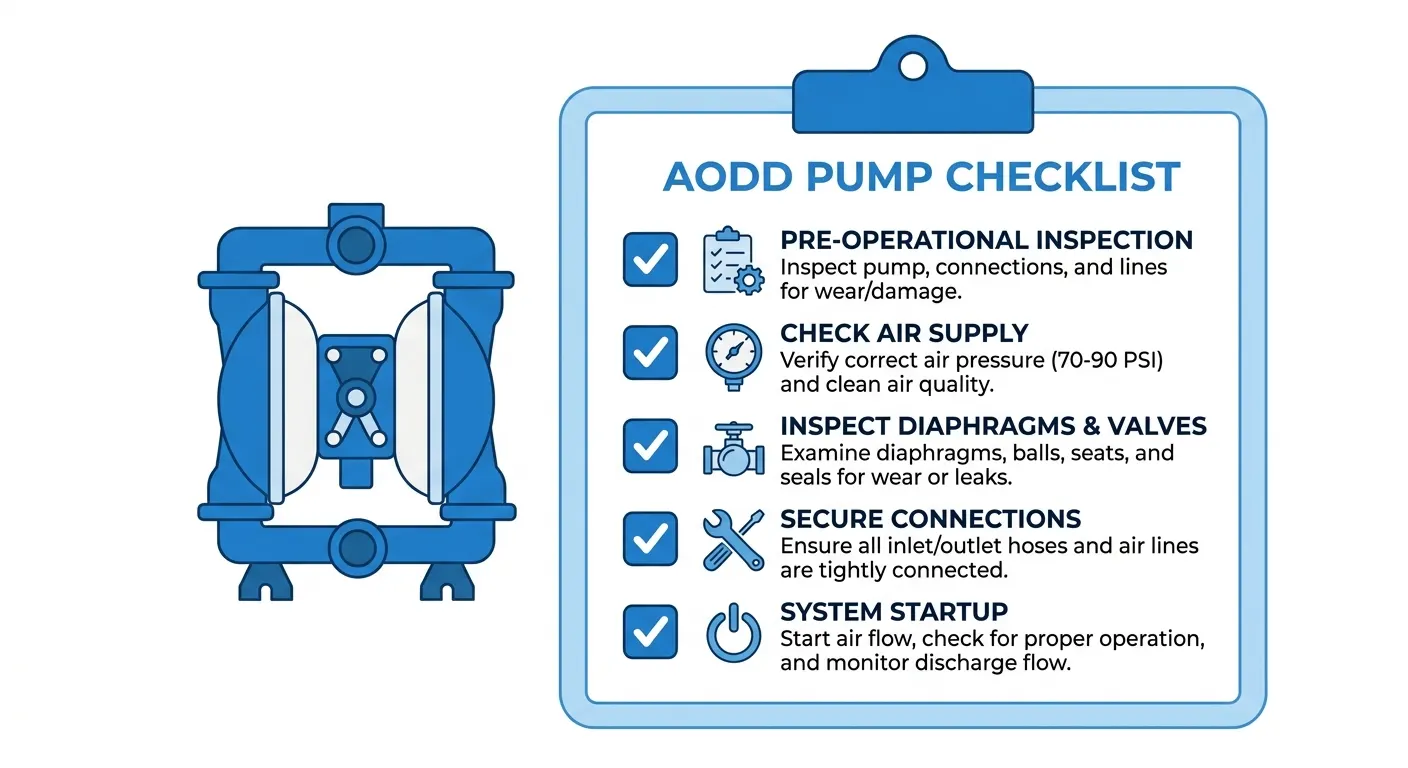
Since the industry diaphragm pump applications are so varied, selecting the right product comes with your understanding of your fluid characteristics and operating conditions. So, here’s a brief checklist you must follow!
● Does your fluid contain solids, slurry, sediment, or abrasive particles that are likely to clog conventional pumps?
● Is there a possibility that the pump could occasionally run dry during normal operations?
● Is the fluid corrosive, hazardous, flammable, or otherwise difficult to handle under regular safety protocols?
● Do you need self-priming capability to simplify startup or handle varying suction conditions?
● Is variable flow control required across different production or processing stages?
● Is the fluid highly viscous, requiring a pump that can move thick materials without stalling?
● Are hygiene or sanitation standards critical, requiring food-grade or pharmaceutical-compliant pump configurations?
If you answered yes to two or more of these questions, an AODD pump is very likely the right
solution for your application.
Finding the right AODD pump for your industry
AODD pumps have gained immense traction across so many industries because they can easily handle everything, from corrosive chemicals to abrasive slurries and food products. Their versatility, self-priming ability, dry-run tolerance, and flexible flow control make them perfect for demanding applications. However, selecting the right pump will depend on the fluid characteristics, operating environment, and process requirements. So, if you need help identifying the best solution, Bonzer can provide expert guidance tailored to your specific needs.
FAQs
Q1. Which industry uses AODD pumps the most?
Industries such as paints & coatings, dyes & pigments, solar cell manufacturing, sanitary ware, ceramics, agrochemicals, specialty chemicals, epoxy resins & adhesives, chemical processing, mining, wastewater treatment, food production, and coatings manufacturing rely heavily on AODD pump technology.
Q2. Can AODD pumps handle abrasive slurries?
Yes. AODD pumps are specifically designed to transfer abrasive slurries containing solids while minimizing clogging and wear.
Q3. Are AODD pumps suitable for food processing?
Sanitary AODD pumps will help you safely transfer dairy products, sauces, syrups, and other food-grade liquids.
Q4. Why are AODD pumps common in chemical plants?
These equipment units offer excellent chemical resistance, leak-reducing designs, and safe operations in hazardous environments with flammable chemicals.
Q5. How can Bonzer help select the right pump?
At Bonzer, our experts evaluate fluid characteristics, application requirements, and operating conditions to recommend the best AODD pump for your business.