 admin@bonzermarketeers.com
 +918799573034
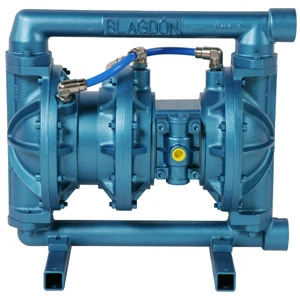
Air-Operated Double Diaphragm (AODD) pumps are widely used across chemical, paint, coating, pharmaceutical, wastewater and other process industries because they can handle a broad range of difficult fluids.
Like every mechanical system, however, an AODD pump contains components that wear over time.
Diaphragms repeatedly flex, valve balls and seats continuously open and close, seals are exposed to chemicals, and air-valve components operate through millions of cycles during the pump's service life.
When a Blagdon AODD pumps requires maintenance, the most important question is therefore not simply:
Where can I buy a spare?
The better question is:
How do I identify the correct replacement component for my exact pump model and application?
Selecting a replacement only because it looks similar can result in incorrect fitment, poor chemical compatibility or premature failure.
This guide explains how industrial maintenance and purchase teams can identify suitable compatible replacement parts for selected Blagdon® AODD pump applications.
How Does an AODD Pump Work?
An AODD pump uses compressed air to move two flexible diaphragms connected through a common shaft.
Compressed air is alternately directed to each side of the pump by the air-distribution system.
As one diaphragm moves and discharges liquid from one chamber, the opposite diaphragm moves in the other direction and draws fresh liquid into the second chamber.
Valve balls and seats control the direction of fluid movement through the suction and discharge passages.
Because the pump is pneumatically driven, an electric drive motor is generally not required directly at the pump.
This is one reason AODD pumps are widely considered for demanding industrial fluid-transfer applications.
However, compressed-air operation should not be interpreted as meaning that every installation is automatically free from ignition or explosion risk.
For flammable or hazardous liquids, suitable pump materials, grounding/bonding, installation practices and applicable plant-safety requirements must still be followed.
Where Are Blagdon® AODD Pumps Commonly Used?
Depending on the selected pump construction and materials, AODD pumps may be used for applications involving:
- Chemicals
- Acids and alkalis
- Paints and coatings
- Printing inks
- Resins and adhesives
- Solvents
- Wastewater
- Slurries
- Viscous liquids
- Pharmaceutical and process applications
- Liquids containing suspended solids
The suitability of a particular pump depends on the exact fluid, concentration, temperature, viscosity, solids content, operating pressure and materials of construction.
Which AODD Pump Components Commonly Require Replacement?
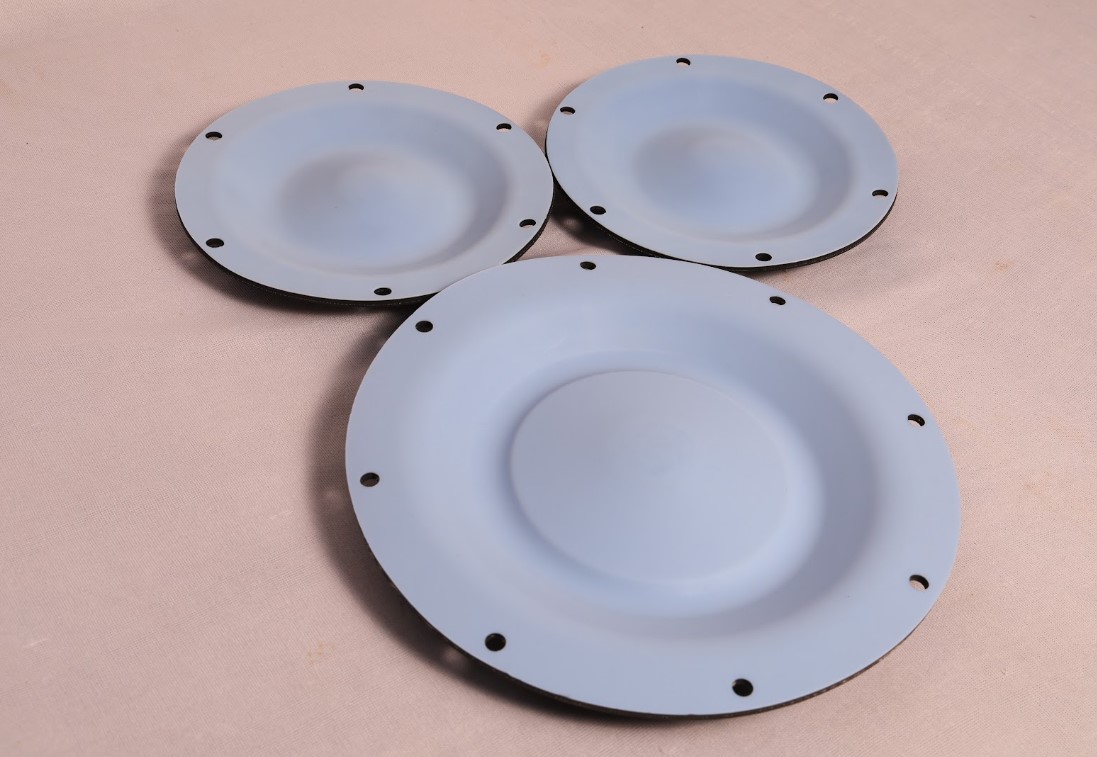
AODD pumps contain several components that may require inspection or replacement during routine maintenance.
1. Diaphragms
Diaphragms are among the most important wear components in an AODD pump.
They continuously flex during operation and are exposed to both mechanical cycling and the pumped liquid.
Their service life can be affected by:
- Pump cycling speed
- Chemical compatibility
- Operating temperature
- Discharge pressure
- Abrasiveness
- Diaphragm material
- Pump operating conditions
When identifying a replacement diaphragm, the pump model alone may not always be sufficient.
The diaphragm material and applicable reference number should also be checked wherever possible.
2. Valve Balls
Valve balls open and close during every pumping cycle.
Their condition directly affects suction, discharge and sealing performance.
Wear, swelling, deformation or chemical attack can prevent a ball from sealing correctly against its seat.
Typical symptoms can include:
- Reduced flow
- Difficulty priming
- Unstable discharge
- Loss of suction performance
3. Valve Seats
Valve seats work together with the valve balls to control fluid direction.
Damage, wear or chemical attack on the seating surface can affect pump efficiency.
For maintenance purposes, balls and seats should be inspected together rather than considering either component in isolation.
4. O-Rings, Gaskets and Seals
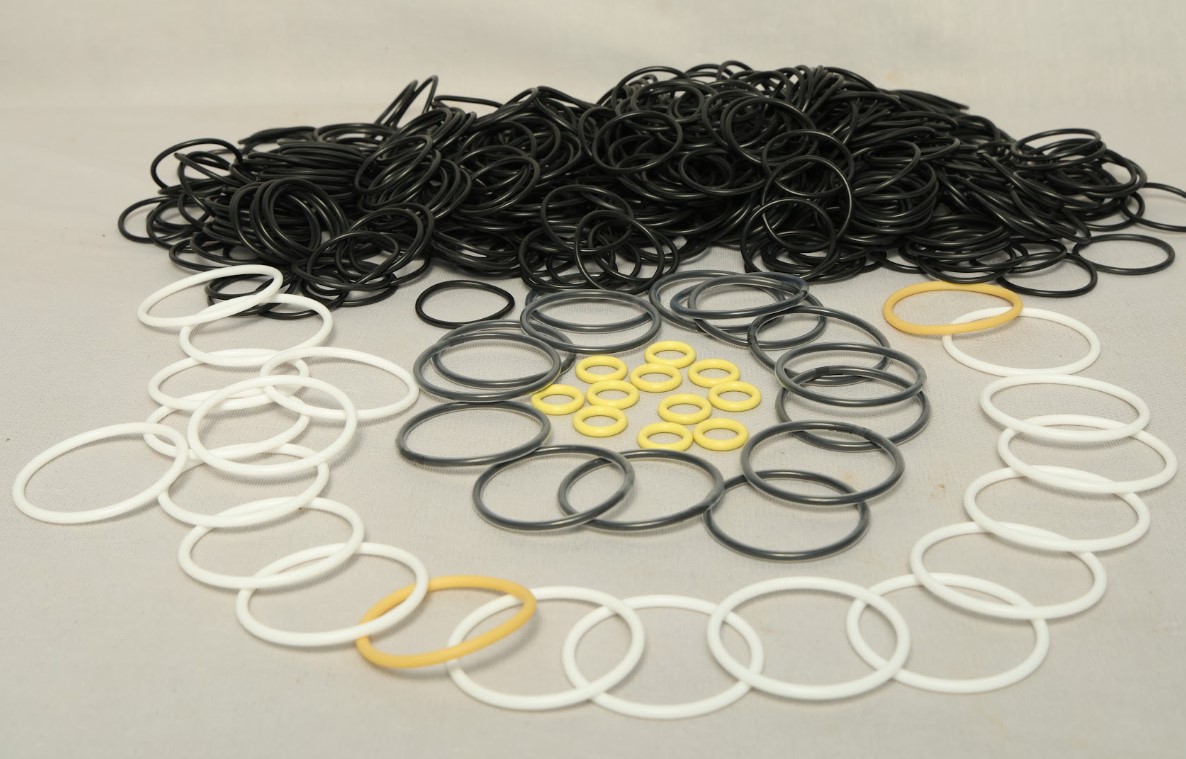
O-rings and other sealing components may be exposed to the process liquid or compressed-air system depending on their location.
The correct material is therefore important.
An elastomer suitable for one liquid may swell, soften, crack or lose sealing performance in another application.
5. Air-Valve Components
The air-distribution system alternates compressed air between the two diaphragm chambers.
Depending on the pump design, air-side maintenance can involve components such as:
- Seals
- O-rings
- Spools
- Sleeves
- Gaskets
- Other air-valve components
Contaminated air, wear or incorrect operating conditions can contribute to air-system problems.
Do Not Select Replacement Parts Only by Appearance
One of the most common maintenance mistakes is assuming that two parts are interchangeable because they look similar.
A diaphragm, ball, seat or seal can have similar external dimensions while still differing in:
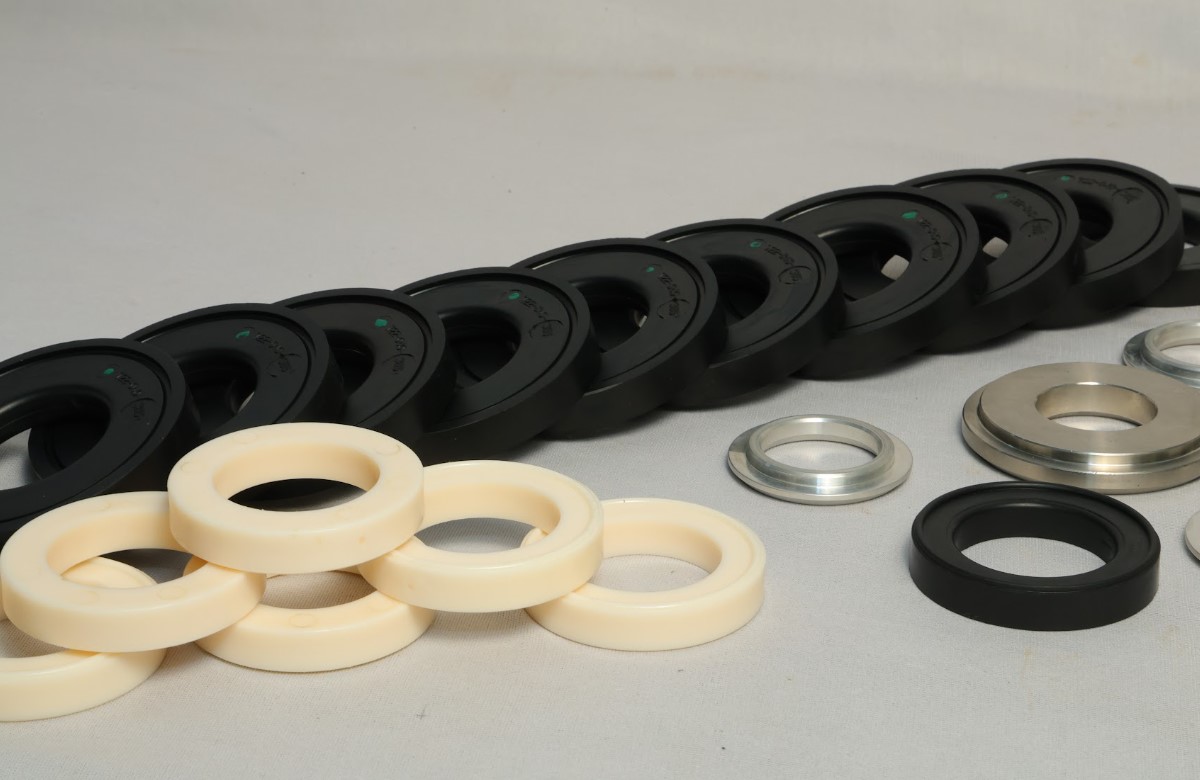
- Material
- Thickness
- Profile
- Shaft interface
- Sealing geometry
- Hardness
- Valve design
- Manufacturing tolerance
For this reason, physical appearance should be treated only as supporting information.
The pump model and applicable reference number should be used wherever available.
How to Identify the Correct Compatible Replacement Part
Before requesting a replacement part, collect as much information as possible.
Step 1: Check the Pump Nameplate
Start with the pump nameplate.
Record the complete:
- Manufacturer/brand reference
- Pump model
- Pump size
- Serial information, where relevant
A clear photograph of the entire nameplate is often more useful than manually typing only part of the model number.
Step 2: Check the Existing Part Number
If the removed component contains an identifiable reference number, record it.
Also check:
- Previous maintenance records
- Existing packing
- Pump manual
- Earlier purchase order
- Previous invoice
- Maintenance history
An existing reference number can significantly improve identification accuracy.
Step 3: Identify the Component Material
Material selection is particularly important for diaphragms, balls, seats and seals.
Common AODD pump materials may include:
- PTFE
- Santoprene
- Buna-N / NBR
- EPDM
- Other elastomers and engineering materials
Do not assume that a particular material is automatically suitable simply because it has worked in another pump.
Selecting the Correct Diaphragm Material
PTFE is widely used because of its excellent resistance to many aggressive chemicals.
However, it should not automatically be described as the “best” diaphragm for every chemical application.
The correct selection depends on factors including:
- Chemical
- Chemical concentration
- Operating temperature
- Pumping speed
- Flex-life requirement
- Abrasiveness
- Application conditions
Similarly, elastomers such as Santoprene, Buna-N or EPDM may be suitable for certain applications but should be selected only after confirming compatibility with the actual process liquid.
All wetted components should be considered—not only the diaphragm.
What Information Should You Send for Spare-Part Identification?
For faster and more reliable identification, provide:
1. Complete pump model
2. Pump size
3. Clear nameplate photograph
4. Existing reference/part number
5. Photograph of the removed component
6. Existing component material
7. Pumped liquid or chemical
8. Concentration, where relevant
9. Operating temperature
10. Operating pressure
11. Description of the pump problem
The more information available, the lower the risk of selecting an incorrect component.
Troubleshooting: Which Parts Should You Inspect?
The following is a general diagnostic guide.
| Pump symptom | Components/conditions to inspect |
|---|---|
| Pump does not prime | Balls, seats, suction conditions, air supply |
| Reduced flow | Diaphragms, balls, seats, air supply, piping restriction |
| Pump stalls | Air valve, air pressure, air contamination, mechanical condition |
| Air leakage | Air-side seals, O-rings, air-valve components |
| Unstable discharge | Balls, seats, diaphragms, suction conditions |
| Fluid observed at air exhaust | Stop operation and inspect diaphragms immediately |
| Frequent diaphragm failure | Material compatibility, cycling speed, pressure, installation conditions |
This table should be used as an initial diagnostic guide only.
The actual cause should be confirmed before ordering replacement components.
Can an AODD Pump Run Dry?
Many AODD pumps tolerate dry-running conditions better than pump technologies that depend on the pumped liquid for cooling or lubrication.
However, that does not mean that prolonged dry running causes “zero damage.”
When the pump runs without fluid, it may cycle at a high rate depending on the air supply and system conditions.
Extended high-speed cycling can accelerate wear of elastomers and other components.
For this reason, continuous unnecessary dry operation should generally be avoided.
When a Diaphragm Fails, Should All Wet-Side Parts Be Replaced?
Not automatically.
The correct maintenance approach depends on:
- Pump condition
- Service history
- Operating hours
- Application severity
- Condition of the opposite diaphragm
- Balls and seats
- Seals
- Available maintenance kit
When one diaphragm fails, the opposite diaphragm and associated wet-side components should be inspected carefully.
During planned overhaul, replacing the applicable matched wear components or using the correct repair kit can often reduce the risk of another shutdown shortly afterward.
Compatible Replacement Parts vs Original Manufacturer Parts
Industrial plants may choose original manufacturer components or independently manufactured compatible replacement parts depending on their technical requirements, maintenance policy and procurement strategy.
A compatible component should never be selected solely because its appearance is similar to the original part.
Important considerations include:
- Material quality
- Dimensional accuracy
- Manufacturing consistency
- Correct design
- Application suitability
- Chemical compatibility
- Pump-model compatibility
It is also inappropriate to assume that every aftermarket component will automatically provide the exact same operating life as an original component.
Service life depends heavily on the application and operating conditions.
The correct objective should be:
proper compatibility + suitable material + accurate fitment + dependable application performance.
How BONZER Supports Blagdon® AODD Pump Maintenance
BONZER supplies independent aftermarket replacement components compatible with selected AODD pump models.
For Blagdon® pump applications, available compatible replacement requirements may include items such as:
- Diaphragms
- Valve balls
- Valve seats
- O-rings and seals
- Air-valve components
- Maintenance/repair components
Availability and compatibility depend on the exact pump model and component reference.
BONZER recommes checking the pump model, part number, nameplate and application details before ordering.
Have a Part Number? Send It Directly
If you already know the original/reference part number, share it with BONZER along with the complete pump model.
Where a compatible replacement is available, the technical team can review the requirement and confirm the applicable option.
Reference numbers are used only for identification and compatibility purposes.
Don't Know the Part Number? Send the Pump Nameplate
If the spare part number is unknown, send:
Pump nameplate photo + old part photo + pump model + application
This is often enough to start the identification process.
For diaphragms and other chemically exposed components, also share the liquid and operating conditions so that the material can be reviewed.
Frequently Asked Questions
Which parts in an AODD pump commonly wear?
Common wear components include diaphragms, valve balls, valve seats, O-rings, seals and selected air-valve parts.
Actual wear depends on the pump design and operating conditions.
Can a Blagdon® AODD pump run dry?
AODD pumps generally tolerate dry running better than many other pump technologies. However, extended high-speed dry operation can accelerate component wear and should generally be avoided.
Is PTFE always the best diaphragm material?
No.
PTFE offers excellent resistance to many chemicals, but diaphragm selection should also consider chemical concentration, temperature, flex life, abrasiveness and operating conditions.
Can I identify a replacement spare without the part number?
Sometimes.
A clear pump nameplate, complete pump model, old-part photograph, dimensions and application details may help identify the required component.
Using an existing reference number is preferable whenever available.
Are compatible replacement parts the same as original manufacturer parts?
No.
Compatible replacement parts are independently manufactured aftermarket components intended for use in applicable pump models.
They should not be represented as original or genuine manufacturer parts.
Compatibility should be verified before use.
Does BONZER supply compatible replacement parts for Blagdon® pumps?
BONZER supplies independent aftermarket replacement parts compatible with selected Blagdon® AODD pump models.
Availability depends on the exact pump model and required component.
Need Help Identifying a Compatible Replacement?
To request technical review and quotation, send BONZER:
Pump model
+ Nameplate photograph
+ Existing reference number, if available
+ Old component photograph
+ Fluid/application details**
This information helps identify a suitable compatible replacement more accurately and reduces the possibility of incorrect selection.
Trademark & Independent Supplier Notice
Blagdon® is a trademark of its respective owner. BONZER MARKETEERS is an independent supplier of aftermarket compatible replacement parts and is not an authorized distributor, dealer, representative, service centre or affiliate of Blagdon. Brand names, pump models and original/reference part numbers are used solely for identification and compatibility purposes. Any compatible replacement product offered by BONZER is an independently supplied aftermarket product unless expressly stated otherwise.