
 admin@bonzermarketeers.com
 +918799573034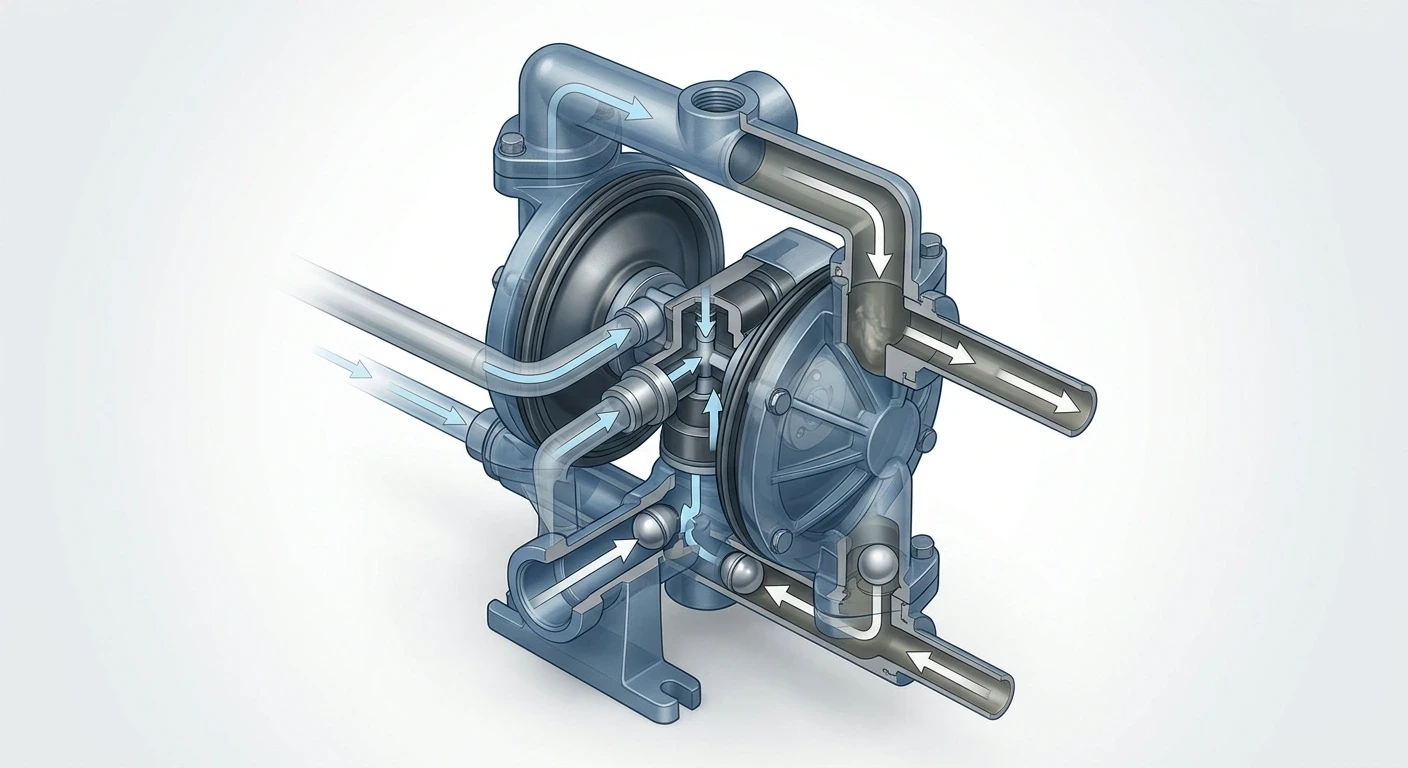
Imagine a maintenance team troubleshooting a fluid transfer system when, all of a sudden, they notice something unusual—the pump has no electric motor. Yet it continues to move chemicals smoothly with the help of compressed air. Encounters like these often raise a very simple yet impactful thought: how does an air operated diaphragm pump work?
The answer lies in a straightforward but innovative design, blending in compressed air with flexible diaphragms to keep the fluid moving efficiently. Thanks to this, it can handle everything, from chemicals and slurries to food products and wastewater. And that’s why AODD pumps have become a preferred choice across multiple industries. In this article, we will break down the key components, explain the working principle, explore the airflow cycle, and delve into its applications and advantages.
What is an air-operated diaphragm pump?
An air-operated diaphragm pump is a positive-displacement system, relying on compressed air to move fluids. This is what makes it suitable for hazardous environments where electrical equipment can lead to safety risks. An AODD pump comes with two flexible diaphragms, working back and forth to create suction and discharge. Here’s a basic AODD pump working principle you should know.
● Compressed air moves from the diaphragm while pulling the other in the opposite direction.
● This movement creates suction, drawing the fluid into the pump chamber.
● Check valves control the flow direction and prevent backflow.
● The fluid is discharged as the diaphragms complete each cycle.
AODD pumps are designed to handle corrosive chemicals, viscous liquids, slurries, and solid-laden fluids. Owing to this, they are widely used across food production, chemical processing, mining, wastewater treatment, and general manufacturing operations.
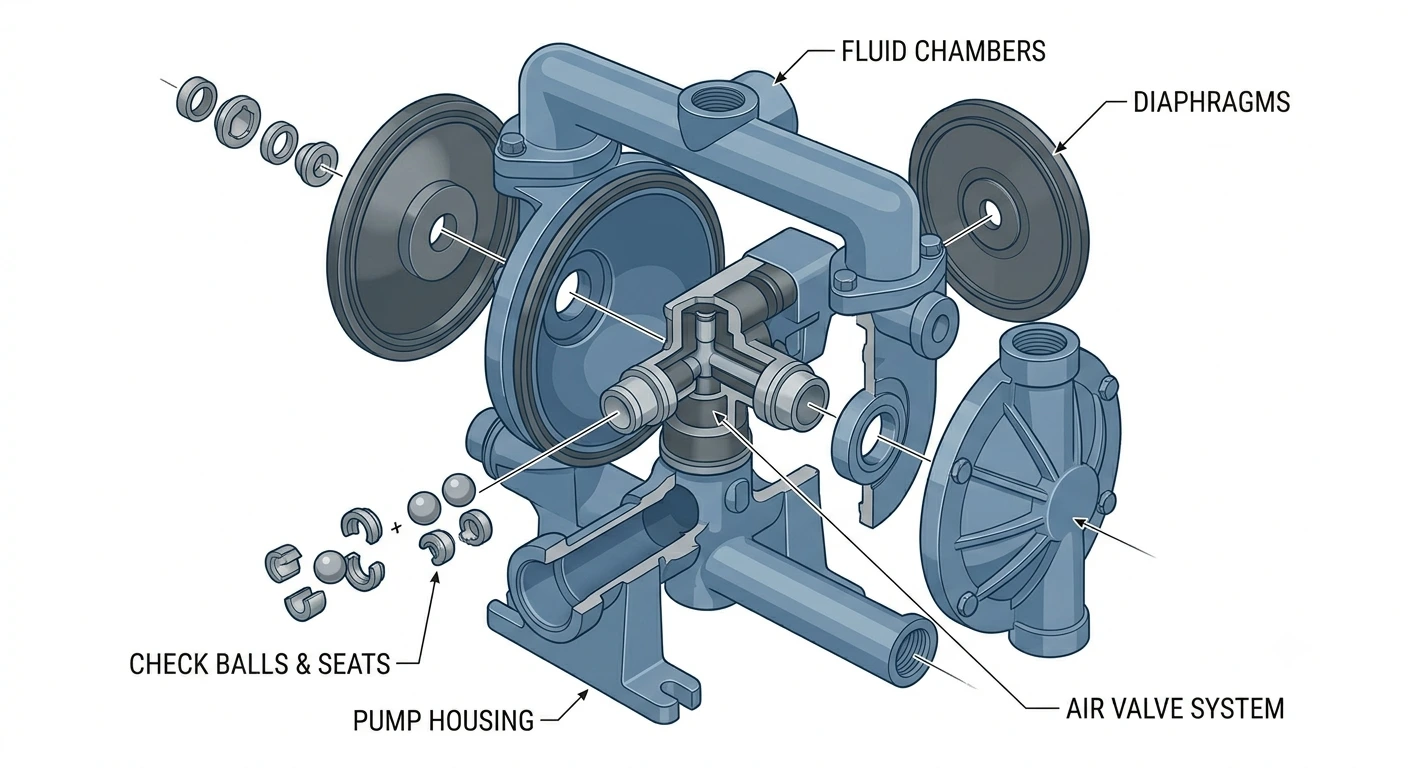
Key components of an AODD pump
Diaphragms
These are the primary moving components of any type of AODD pump. They follow a reciprocating motion, which ultimately helps create suction and discharge cycles. Some of the common materials used in the construction of the diaphragms are PTFE, neoprene, Santoprene, and Buna-N. The selection strategy usually follows the compatibility principle in accordance with the material to be transferred.
Air valve systems
Air valve systems are responsible for directing compressed air alternately between the two diaphragm chambers. This continuous switching action drives the diaphragm movement, ensuring a consistent pumping cycle without requiring electric power.
Check balls and seats
Check balls and seats act as one-way valves within the pump, opening and closing during operation to control fluid direction, prevent backflow, and maintain efficient product transfer.
Fluid chambers
The liquid enters these chambers, moves around, and exits the pump. As the diaphragms cycle back and forth, they get filled alternately and discharge fluid.
Pump housing
The pump housing encloses all the internal components, thereby offering structural support. Material options commonly used across the industries include polypropylene, stainless steel, aluminum, and PVDF.
Step-by-step: How does an air-operated diaphragm pump work?
Here, we have broken down the pumping cycle to help you understand air diaphragm pump operation at a high level.
Step 1: Compressed air enters the air valve
There’s an air inlet through which compressed air enters the pump and reaches the air valve assembly. It then directs the air to one diaphragm chamber while venting the opposite chamber. This controlled airflow initiates diaphragm movement and starts the pumping cycle with no dependency on an electric motor.
Step 2: First diaphragm moves outward
Air pressure pushes the first diaphragm outwards. As this membrane moves, the connected shaft pulls the opposite one inwards. This synchronized movement creates a pressure difference between the two fluid chambers, preparing one side for suction while the other for discharge.
Step 3: Fluid is drawn into the pump
The inward-moving diaphragm increases the chamber volume, creating a vacuum. The suction stroke opens the inlet check valve and draws fluid into one chamber. At the same time, the outlet check valve remains closed, preventing fluid from flowing back into the chamber.
Step 4: Air valve shifts automatically
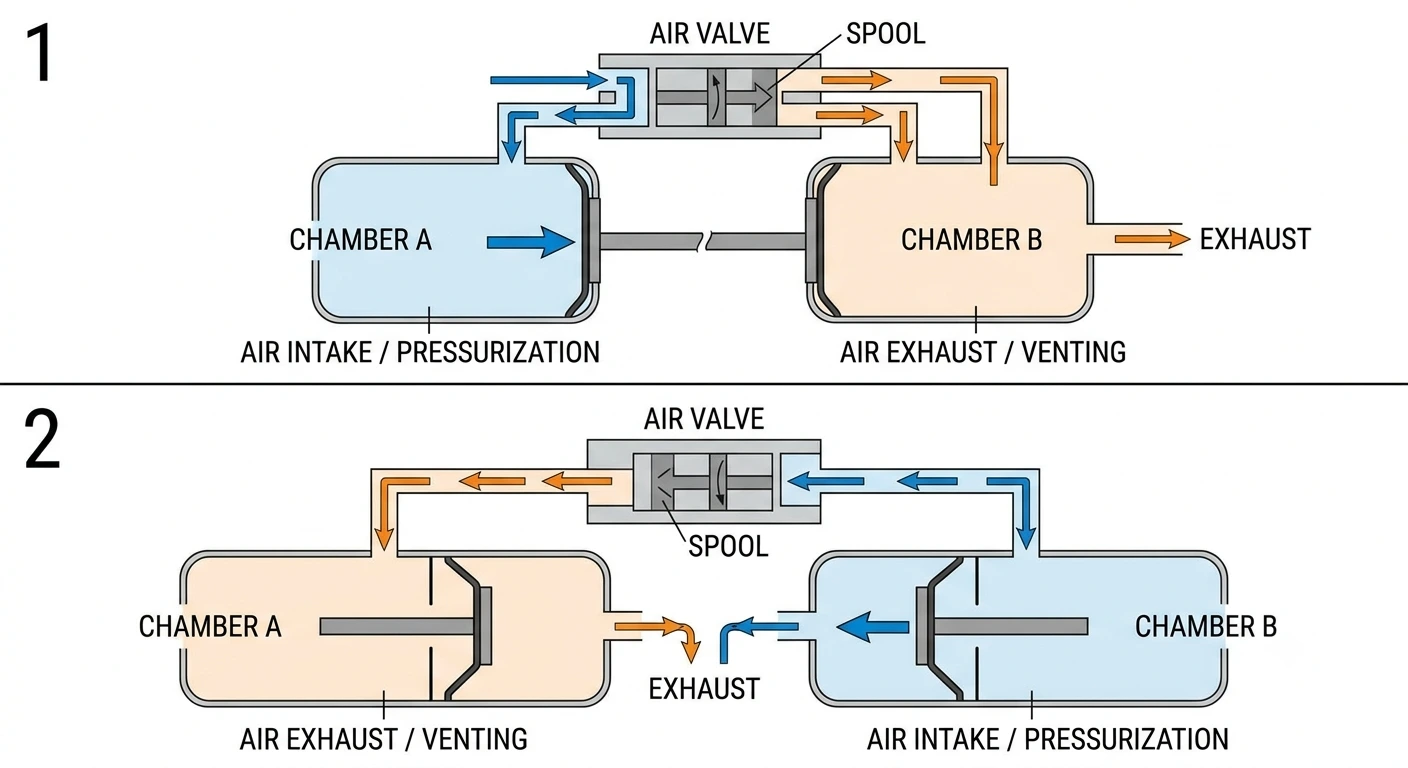
Once the diaphragm reaches the end of its stroke, the air valve automatically switches position. Compressed air is redirected to the opposite diaphragm chamber. This automatic air valve switching eliminates the need for external controls and keeps the pump operating continuously.
Step 5: Opposite diaphragm creates discharge pressure
Air pressure now acts on the opposite diaphragm, pushing it outward. This reduces the fluid chamber volume and generates the discharge pressure. The inlet valve closes while the outlet valve opens, ensuring fluid continues to move towards the discharge chamber.
Step 6: Fluid exits the pump
As discharge pressure increases, fluid is forced through the outlet valve and exits the pump. The one-way valve design prevents reverse flow and maintains efficient transfer.
Step 7: Continuous reciprocating cycle
The diaphragm continues alternating between suction and discharge strokes as compressed air shifts from one chamber to the other. Thanks to this reciprocating action, a continuous pumping cycle is established.
Visualizing the AODD pump cycle
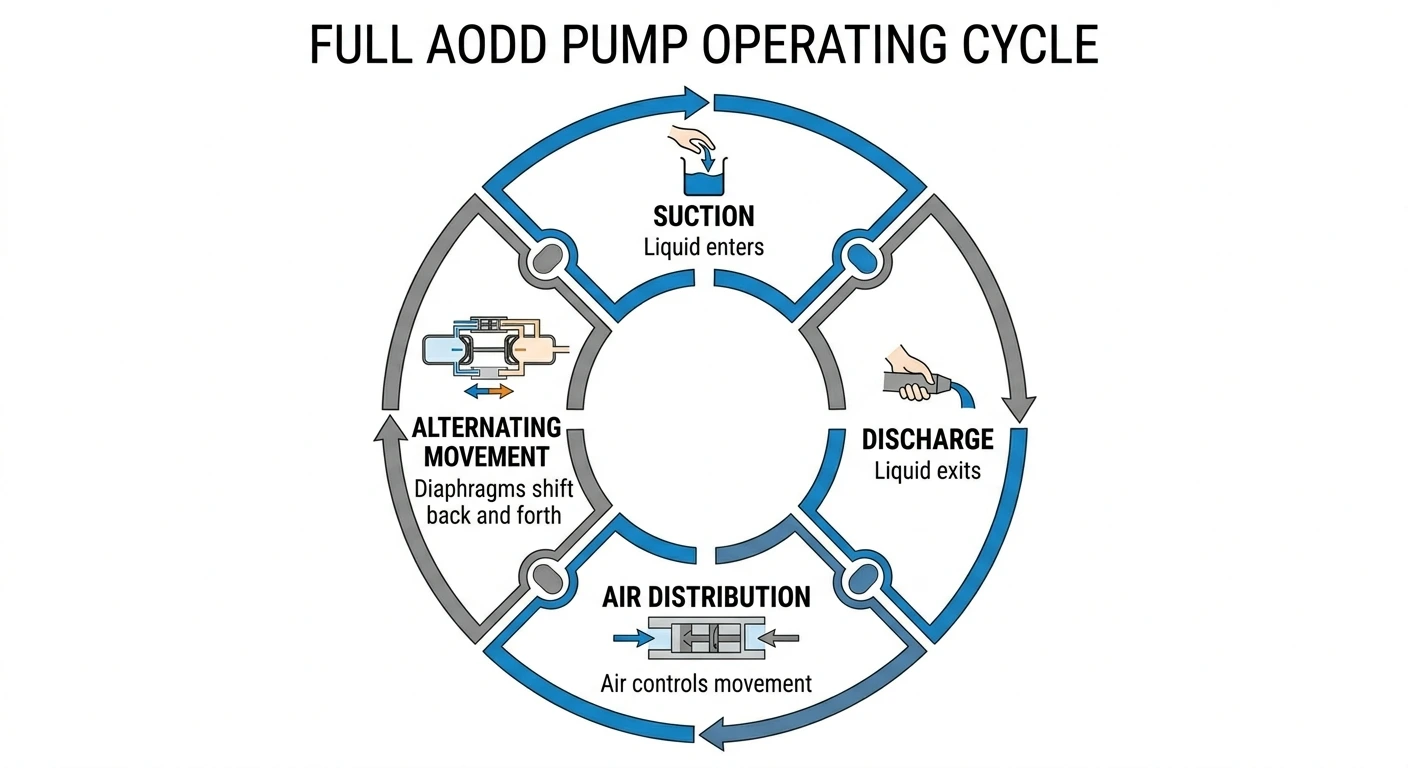
The AODD pump cycle is based on two diaphragms working in opposite directions. Here’s what the cycle looks like.
● Suction side: The diaphragm moves inward, creating a vacuum that pulls fluid into the inner chamber through the inlet check valve.
● Discharge side: The opposite diaphragm moves outward, increasing pressure and forcing fluid through the outlet check valve.
● Air distribution: The air valve directs compressed air alternately to each diaphragm chamber and vents the opposite side.
● Alternating diaphragm movement: As one diaphragm performs the suction stroke, the other engages in the discharge stroke, ensuring continuous fluid transfer.
Why are AODD pumps different from other pumps?
Feature | AODD pump | Centrifugal pump |
Self-priming | Yes | Limited |
Dry run capability | Yes | No |
Handles solid | Excellent | Limited |
Variable flow | Easy | Moderate |
Explosion safe | Yes | Often requires special motors |
Major advantages of air-operated diaphragm pumps
The air-operated double diaphragm pump can handle demanding operations while maintaining a simple design. Below are some of the benefits it offers over electrical pumps.
1: Self-priming capability: Can start pumping without requiring manual priming
2: Dry-run tolerance: Operates safely for short periods without fluid
3: Handles abrasive fluids: Suitable for slurries and solid-containing liquids
4: Chemical compatibility: Available with materials resistant to corrosive elements
5: Portable and easy to install: Requires only an air supply for continuous pumping cycles
6: No electric motor required: Ideal for hazardous and explosion-prone environments
Common industrial applications
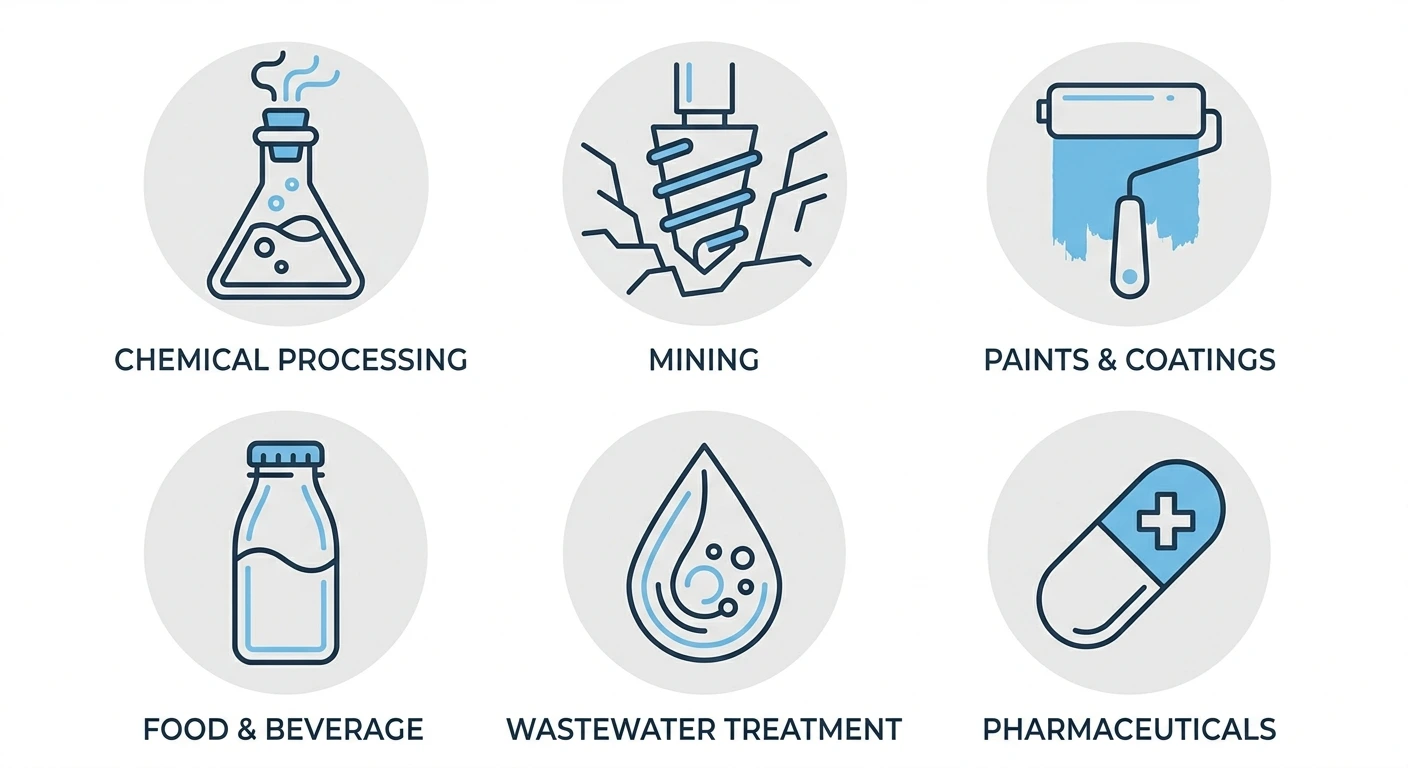
AODD pumps are widely used wherever reliable fluid transfer is necessary. For example:
● Chemical processing
● Mining
● Paints and coatings
● Foods and beverages
● Wastewater treatment
● Pharmaceuticals
Common problems that affect pump performance
Air valve sticking
It is usually caused by moisture, dirt, oil, contamination, or worn-out valve components. As a result, the pump cycle slows down, leading to erratic operations or a complete shutdown. That’s why you should clean the air system, improve air filtration, and replace the damaged valve parts to restore the pump’s performance.
Diaphragm failure
Normal wear, excessive operating pressure, or chemical incompatibility can cause the diaphragms to fail. Some of the common signs include reduced fluid flow, fluid leakage, and air escaping through the exhaust. Replacing the damaged diaphragms and selecting the right material that matches the application can prevent unnecessary disruptions.
Ball valve wear
Ball valves and seats can wear with time, especially when the AODD pumps work with abrasive or corrosive fluids. This can further cause backflow, difficulty in maintaining prime, and lower the overall pumping efficiency. Regular inspection and timely replacement of worn valve components will help maintain reliable fluid transfer.
Low air pressure
This usually occurs due to undersized compressors, air leaks, clogged filters, or restricted air lines. As a result, the AODD pump slows down, produces lower flow rates, and even struggles to achieve the required discharge pressure. So, always check the air supply system and correct pressure losses to get this issue resolved.
Product leakage
It is commonly caused by damaged diaphragms, worn seals, loose fasteners, and deteriorated housing components. Signs include visible fluid loss, reduced efficiency, and safety concerns around the AODD pump. The best approach is to identify the leak source and replace worn parts to quickly restore safe and efficient operations.
Maintenance tips to extend AODD pump life
Routine maintenance will help maximize the pump’s performance and reduce unexpected downtime. Here’s a preventive maintenance schedule you can implement to ensure your equipment’s longevity isn’t compromised.
● Regularly inspect diaphragms for signs of wear, cracking, stretching, or chemical degradation to prevent unexpected failures.
● Ensure the compressed air supply is clean, dry, and properly filtered to reduce air valve wear and operating issues.
● Replace worn check balls and valve seats before they start affecting flow rates, priming capabilities, or overall AODD pump efficiency.
● Inspect houses, fittings, and air connections for leaks, as these can reduce pressure and impact the pump’s performance.
● Use genuine replacement parts to maintain proper fit, reliable operation, and manufacturer-recommended performance standards.
Conclusion
Understanding how an AODD pump works makes it easier for you to select the right choice for your business application. By using compressed air to drive alternating diaphragms, it delivers reliable fluid transfer across a wide range of industries. Its self-priming capabilities, dry-run tolerance, and ability to handle challenging fluids make it a practical choice for demanding environments. Regular inspection of diaphragms, valves, and air systems helps maintain performance and extend service life. If you need further guidance on pump selection, components, or spare parts, the Bonzer team can help. So, connect with us today to have a detailed consultation!
FAQs
Q1. How does an air-operated diaphragm pump create suction?
An inward diaphragm movement increases the chamber volume, thereby creating a vacuum inside that pulls the fluid through the inlet check valve system.
Q2. Can an AODD pump run dry?
Yes, most AODD pumps can run dry temporarily without suffering from internal component damage. That’s why these are suitable for intermittent fluid transfer applications.
Q3. What fluids can an AODD pump handle?
AODD pumps are robustly designed so that they can handle chemicals, oils, slurries, wastewater, food products, viscous liquids, and fluids containing suspended solids effectively.
Q4. Why is compressed air used instead of electricity?
Compressed air improves operational safety in hazardous areas, thereby eliminating the need for electrical power at installation.
Q5. How often should diaphragms be replaced?
Replacement frequency of the diaphragms in an AODD pump depends on fluid compatibility, operating conditions, pump usage, pressure levels, and maintenance practices followed.
Q6. Does Bonzer supply AODD pump spare parts?
Yes, Bonzer supplies replacement diaphragms, valve balls, seats, repair kits, and other essential AODD pump components.