 admin@bonzermarketeers.com
 +918799573034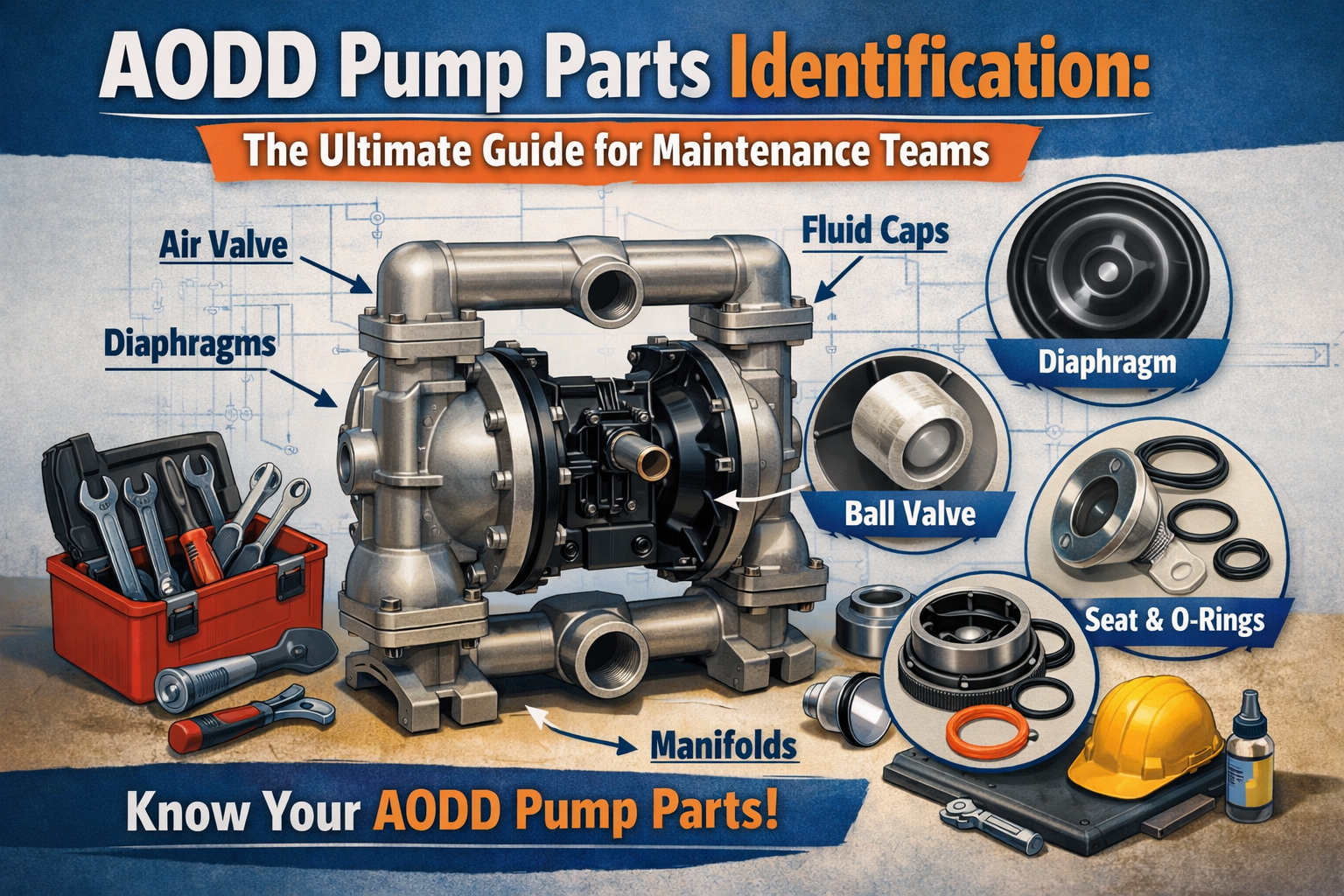
There is no perfect time for a pump to fail. One minute you see the line moving, and the next, maintenance teams are under pressure to diagnose the issue, find the right spare, and get operations up and running. That’s why AODD Pump Part Identification matters so much in real-world maintenance.
This lies the difference between quick repair work and a long, expensive delay caused by ordering the wrong component. Since AODD pumps are built to handle everything, from abrasive chemicals and slurries to viscous fluids, every internal part plays a critical role. Misidentifying a diaphragm, ball, seat, or air valve can stretch downtime into weeks and even months. BONZER MARKETEERS helps reduce the risks by engineering premium-grade spare parts, each meant to deliver reliable performance and compatibility with major global AODD pump brands.
Anatomy of an AODD pump: Breaking Down the Main Components
At first glance, an AODD pump can look way more complex than it is in reality. Thus, the easiest way to understand it is to split the structure into two working sections: the side handling the fluid and the one powering the movement. With this simple breakdown, troubleshooting becomes faster, and AODD pump parts identification becomes easier. Here are the two major sides of the device you should know.
The wet side: It includes components that come into direct contact with the product, like the diaphragm, balls, seats, and manifolds. These are known to manage fluid flow, transfer, and sealing.
The Air side: Every component creates and controls the motion, like the air valve, pilot spool, muffler, and the center block.
So, Before you order any spare part, always identify which part has failed. This one simple step can save time, cost, and unnecessary replacement errors.
Essential Wet-End Parts: Identification & Selection
Diaphragms: The heart of the pump
Diaphragms are tasked to do all the heavy-lifting tasks within the AODD pumps, which is why getting this part right is of utmost importance. For this, begin by checking the material stamp first. Some of the most common options include:
PTFE
Santoprene
Buna-N
Once you have verified the label, check for the bead design. It will vary by the pump model and brand, which is why ensure you find a compatible design. Material choice matters the most because the diaphragm’s compatibility will directly affect the equipment’s reliability and service life.
During the maintenance routine, inspect for flex fatigue, cracking, edge wear, and chemical swelling— all of which signal it’s time to replace the AODD pump parts. Since you have multiple elastomer options available, you can easily select the diaphragm’s materials based on the specific chemical, temperature range, and duty conditions.
Valve balls and seats: The check valve system
These are known to control flow direction, making them essential to pump efficiency and priming performance. When identifying them, look at both the material type and the design style. Balls can be classified as weighted and non-weighted, while seats are commonly available in metal and plastic versions, depending on the media type and wear conditions.
Worn or damaged seats often lead to poor sealing, backflow, and loss of prime, which will ultimately lead to weakening of the pump. For thicker or more viscous fluids, heavy balls will significantly improve sealing and responsiveness by closing the gaps during every cycle.
Manifolds and fluid chambers
These two elements form the main fluid pathway, which is why identifying them correctly is crucial while replacing the structural wet-end parts. Check the pump’s construction style first. Some models use bolted designs, while others use clamped construction for faster maintenance access.
Beyond the fit, the internal conditions of these AODD pump parts will also matter. During inspection, look closely for internal pitting, surface erosion, or wall thinning, especially if your pump handles abrasive slurries or aggressive chemicals.
The Air Distribution System (ADS): Identifying the brains
The air valve assembly
Located at the central part of the entire assembly, the air valve is shaped as a pivot block, carrying multiple internal sliding spools. Its main task is to control the air flow, which in turn, is to drive the pump cycle. Common failure signs that you should look for are stalling, hesitation, or uneven cycles in your AODD pump. This mainly happens when the spare part is exposed to dirty compressed air, contamination buildup, and icing in freezing operating conditions.
Pilot spool and gaskets
Even though these are smaller and more intricate components controlling air signal changes, they are highly dependent on precision. That’s why maintaining a correct alignment during reassembly is critical. Even the slightest mismatch will cause internal air leakage, poor shifting, and inconsistent pump performance. So, it’s better to follow a detailed and credible AODD maintenance guide for precision alignment.
Exhaust mufflers
Fitted at the pump’s end, it acts as a silencer, designed to reduce operational noise and manage the exhaust flow at the same time. When it gets clogged with oil, dirt, or debris, a back-pressure is created. This can often slow down the exhaust speed and reduce the overall pump performance.
How to identify replacement parts for your specific model?
Finding the right spare part will begin with accurate AODD troubleshooting and accurate identification. So, before you place an order, here’s what you need to confirm.
Check the nameplate attached to the center section or the outer body first. It includes key details like the model number, size, and material details.
Many manufacturers use specific letter-based system to indicate the materials, like “P” for Polypropylene and “T” for PTFE. So, ensure you read the model’s string before proceeding further.
Match both wet-end and air-end details properly. For this, confirm which side will need replacement. Only by doing so can you decide if you should order for a Wet end repair kit or an Air end repair kit.
Check date stamps, casting marks, and manufacturer logos to verify the fit and maintain the OEM-quality standards.
"Read More: When an AODD Pump Keeps Stalling"
Preventive Maintenance: When to Replace vs Repair?
Signs your AODD Parts Need Replacing
Fluid in the air exhaust signals a breached diaphragm.
Erratic pump cycles usually mean air valve wear or contamination.
Worn check balls or seats usually cause reduced flow rate within the pump.
The Value of full Repair Kits
A full-scale kit will help you restore sealing performance evenly across the pump, reduce fitment issues, and give the unit a rebuild-like quality. All in all, these will greatly minimize repeat failures in the near future. That’s why BONZER MARKETEERS always recommends using a complete wet-side or air-side repair kit instead of replacing a single spare part.
Conclusion: Keep Your Operations Flowing with Bonzer Marketeers Supplied Spares
Accurate AODD pump parts identification is critical for faster repairs, lower operational downtime, and longer pump life. From air valves to diaphragms, choosing the right material is as important as selecting the right fit. Bonzer Marketeers will help your maintenance teams simplify both these hurdles. So, waste no more time and visit Bonzer Pumps for a free consultation on AODD spare parts and explore our extensive inventory today.
FAQ
How do I know which diaphragm material I need?
Ans: Always choose the diaphragm material based on chemical compatibility, fluid temperature, abrasion level, and your pump manufacturer's specifications.
Why is my AODD pump stalling?
Ans: AODD pumps stall due to air valve contamination, icing, low air pressure, and worn-out internal parts.
Can I use aftermarket parts in my AODD pump?
Ans: Yes, if they match the model specifications and come from a reliable supplier, you can use aftermarket parts in the AODD pump.
How often should I perform maintenance on an AODD pump?
Ans: Perform maintenance at scheduled intervals based on the duty cycle, fluid type, and operating conditions.
What does it mean if fluid is leaking from the air muffler?
Ans: Fluid from the air muffler indicates a ruptured diaphragm, which is why immediate replacement is needed.